
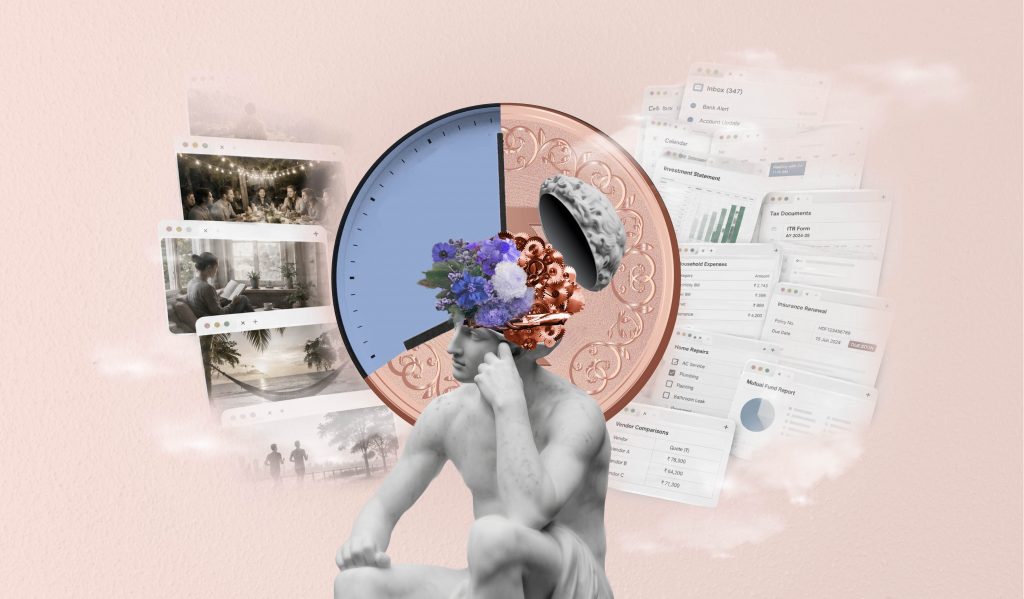

In 1994, doctors began studying a woman they would only ever call S.M., a woman who, as far as anyone could tell, was afraid of absolutely nothing. For the next two decades, researchers at the University of Iowa tried everything to scare her. They walked her through one of the country’s most notoriously frightening haunted houses, and she laughed her way through it, chatting with the monsters jumping out at her. At an exotic pet store, she picked up snakes and tarantulas despite swearing for years that she hated them. Years earlier, a man had held a knife to her throat in a dark park, and she remembered staying completely calm through it.
Nothing scared her, because a rare genetic condition had destroyed both sides of her amygdala, the part of the brain that processes fear and pushes you to avoid danger.
But the rest of us still have that part intact, and it doesn’t only fire for knives and haunted houses. It fires for anything tedious, boring, or vaguely anxiety-inducing too, a tax form, an insurance renewal, updating a nomination on a mutual fund. The amygdala flags the task as a threat, using much of the same circuitry S.M. was missing, and pushes the brain toward avoidance instead of action.
Here’s why that matters even more as you get wealthier. Building wealth doesn’t just give you more money. It also gives you more things to manage: more accounts, more paperwork, and more decisions to make. And all of this comes at a time when your time is becoming more valuable. So the very thing wealth is supposed to make easier can sometimes get harder to manage. You may put off looking at an investment or making a financial decision simply because your brain tends to avoid things that feel complicated, unfamiliar, or demanding.
This newsletter looks at what that avoidance can cost you, what science tells us about the link between wealth and happiness, and how to find the right balance between the two.
In this edition
- The happiness ranking of everyday life
- How to use money to buy back the time you keep giving away
- What should you spend more money on?
- Building your happiness allocation
The happiness ranking of everyday life
There’s a number in the research on happiness that I find more useful than almost any debate about whether money makes people happy : -2.45.
Behavioural data tracking mood against daily activities shows that financial, household, and administrative tasks carry a happiness coefficient of -2.45. That puts admin right alongside being sick in bed, at the very bottom of daily human experience, worse than commuting, worse than most chores anyone complains about.
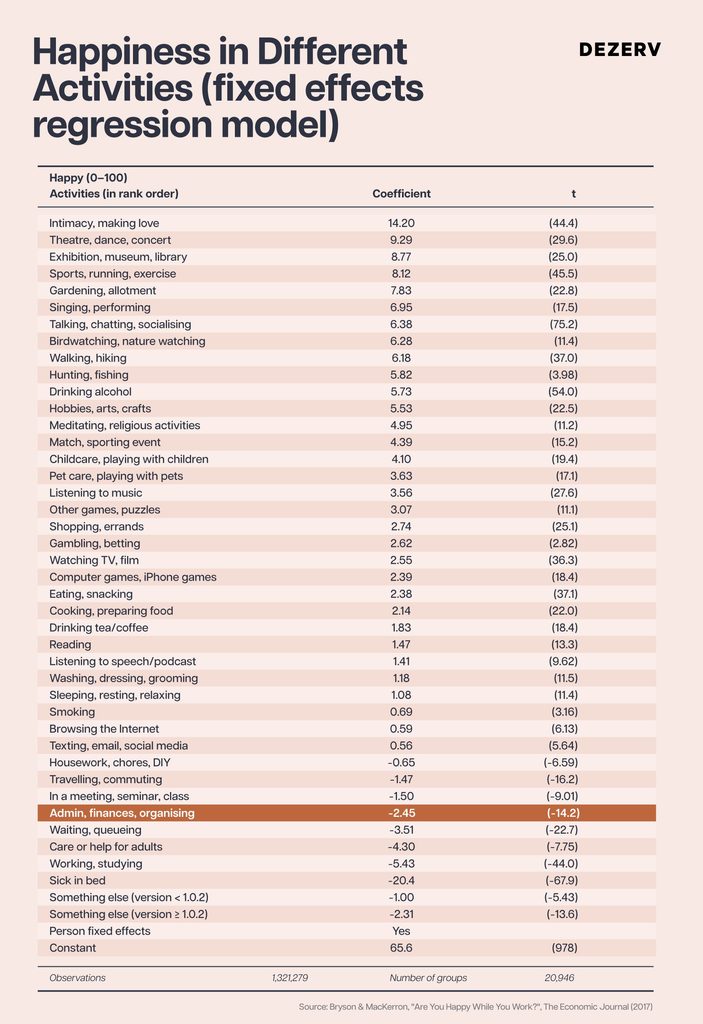
Unlike a strained relationship or a health scare, which no amount of money can touch, admin is one of the few things on the bad end of that list that money actually can remove. And yet it’s usually the thing that expands, not shrinks, as a person does better financially. Think about what sits inside that category. Paying bills. Sorting paperwork. Coordinating household help. Chasing a plumber. Booking appointments. Comparing vendors. Filing documents. Dealing with the small things that somehow multiply when you’re not looking.
None of these activities are catastrophic and that’s exactly what makes them dangerous. They take hundreds of hours a year and give almost nothing back.
A Swedish economist, Staffan Linder saw a version of this problem more than fifty years ago and called it the harried leisure class. His argument was simple: as your income rises, your time becomes more valuable. And once your time feels valuable, you start trying to squeeze more out of every minute. Even leisure becomes something to optimise. The swimming pool you bought to relax becomes something you have to maintain. The farmhouse becomes another property to manage. The holiday becomes 18 WhatsApp groups, three spreadsheets and a calendar.
You have more money. But somehow, less life. And this is where I think wealth creation gets misunderstood. The point of becoming wealthier isn’t just to afford better things. It’s to stop spending your best hours on things that make your life worse.
Researchers who have tracked people’s activities and moods repeatedly find that some of the highest-rated parts of a day are remarkably ordinary: spending time with people you love, exercising, being outdoors, intimacy, engaging experiences.
And near the bottom? Work, Admin, Commuting, and Waiting. Yet these are exactly the things many successful people continue to do themselves. That doesn’t make sense. If you have enough money to pay someone ₹2,000 to solve a problem that you would otherwise spend two hours solving yourself, the question isn’t whether you can afford ₹2,000. But whether your two hours are worth more to you than ₹2,000.
How to use money to buy back the time you keep giving away
This is where money can do something genuinely useful. It can make taxing parts of your life disappear. A cook doesn’t just make dinner. They remove grocery shopping, chopping, cleaning and planning from your week. A driver doesn’t just move you from A to B. They turn a commute into an hour where you can read, call your parents, stare out of the window or simply do nothing. An assistant doesn’t just book appointments. They remove the dozens of tiny decisions that sit behind them. A good CA doesn’t just file your taxes. They remove the mental load of remembering what needs to be done.
All this has become increasingly relevant in urban India. Groceries arrive in minutes, a plumber comes to your door, and a cab is a few taps away. Quick commerce alone is now a multi-billion-dollar industry. Trading money for time has become part of everyday life.
And that’s actually a good thing. A Harvard study of 6,000+ people across several countries, including millionaires, found that people who spend money to save time tend to be more satisfied with their lives, across income levels. This is why I think we should stop looking at these expenses as lifestyle inflation. Sometimes they’re not. Sometimes they’re time investments.
Do a simple test: Does this purchase give me something? Or Does this purchase take something away. The second question is often more valuable. If something consistently drains you and money can remove it, remove it.
But there’s a catch.
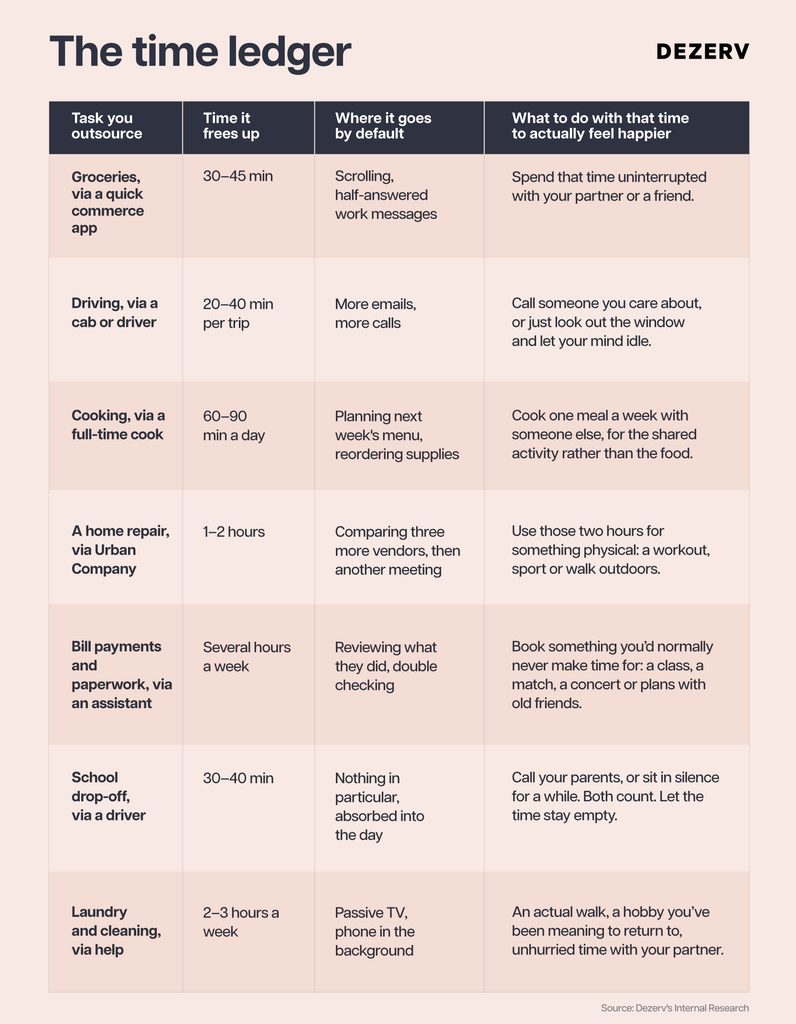
Buying back time doesn’t automatically make you happier. Because we are very good at filling empty space, a concept called time confetti. The 45 minutes you save by skipping the supermarket rarely comes back as 45 uninterrupted minutes. It gets scattered across Instagram, messages and email until it’s gone.
Then there’s the autonomy paradox: tools that give us more control over our time can also make us feel obliged to fill it with more work. You save an hour, only to find another hour of work to put in its place. You haven’t really bought back time. You’ve just created capacity for more work. So there’s a second rule to follow: Never buy back time without deciding what you’re buying it back for.
If the answer is “I’ll get more work done”, that’s fine if that’s genuinely what you want. But don’t tell yourself you’re spending money to improve your life when you’re really spending it to fit another task into the day.
What should you spend more money on?
Once you’ve removed the things that make your life worse, there’s a second job for money: create more of what makes your life better. This is where spending gets interesting.
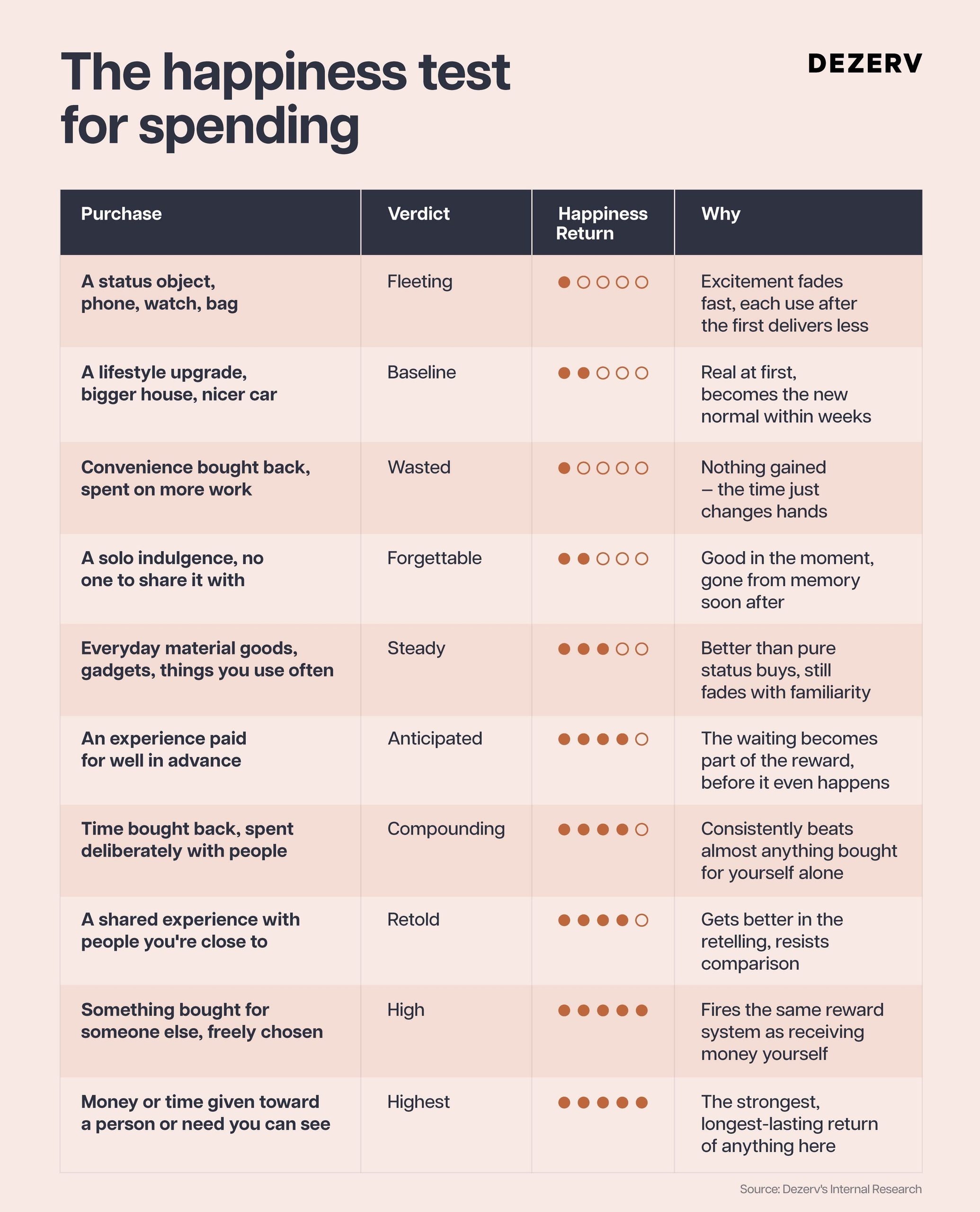
A friend of mine got his first big ESOP payout after his startup was acquired last year. Within a week, most of it had gone into mutual funds and retirement funds. But months later, the thing he still talked about wasn’t any of that. It was flying his three closest college friends to Goa on his own dime, no occasion, no ask, just because he finally could. That trip cost him money. But it bought something he couldn’t have bought in quite the same way before: a memory that four people still talk about.
And there’s a genuine physiological reward wired into helping other people or giving to someone else, and it isn’t a small or occasional effect. Helping or giving, when it’s freely chosen, activates the brain’s reward system much like receiving money yourself. Regular giving is also linked to better mood and health, with the effects lasting far longer than the quick high of buying something for yourself aka helper’s high.
Spending and happiness points in a similar direction: money tends to work better when it buys time, experiences, relationships and generosity, rather than simply more stuff.
Building your happiness allocation
We spend a lot of time thinking about the allocation of our investment portfolio. How much in equity? How much in debt? How many alternatives? How much liquidity? It might be worth doing the same exercise with your life. Take everything that occupies your time and put it through two questions: Does it make my life better or worse? Can money change it?
That gives you four boxes.
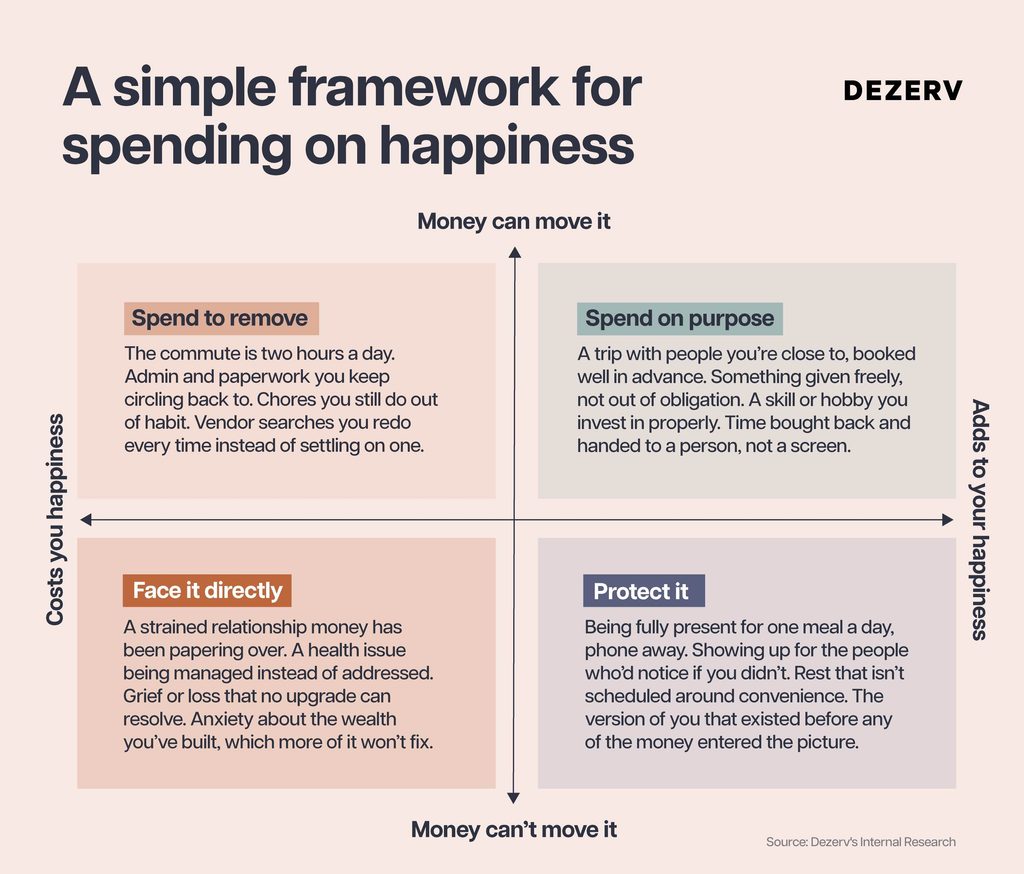
The top-left box is where I think wealthy people often leave the most money on the table. They have the ability to remove things that make their lives worse, but they keep doing them because they’re used to doing them. They’ll spend ₹2 crore upgrading a house and hesitate to spend ₹50,000 a year on something that would give them back 200 hours.
That’s backwards. The return on money isn’t always a thing you can point to. Sometimes it’s an hour that never gets wasted.
And that’s probably the most useful way to think about wealth and happiness. Don’t ask yourself: “What can I buy now that I couldn’t afford before?” Ask: “What part of my life can I stop doing now that I couldn’t stop doing before?” Then ask: “What do I want more of now that I finally have the money to buy it?”
That’s what wealth is for.
Disclaimer:The information provided herein is intended solely for educational and informational purposes. The information contained in this document is for general purposes only and is not a complete disclosure of every material fact, term or condition. In the preparation of this document, Dezerv has used publicly available information and other sources believed to be reliable. The information provided in this document has not been independently verified by Dezerv and are subject to change.