
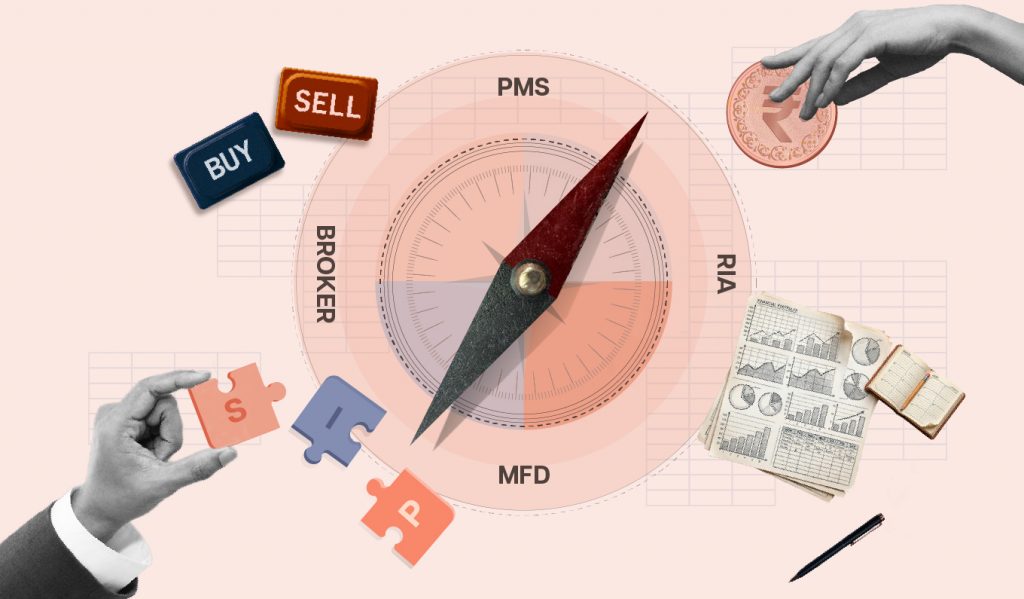

Something interesting happens when wealth in India crosses a certain threshold. Below it, the decisions are relatively simple, where to park savings, which mutual fund to pick, whether to buy or rent. Above it, the questions change character entirely. A founder who has just sold a stake in his company isn’t asking where to open an FD. He’s asking how to manage a ₹15 crore windfall across asset classes he’s never navigated, with tax implications he’s never faced, while still running a business that demands his full attention.
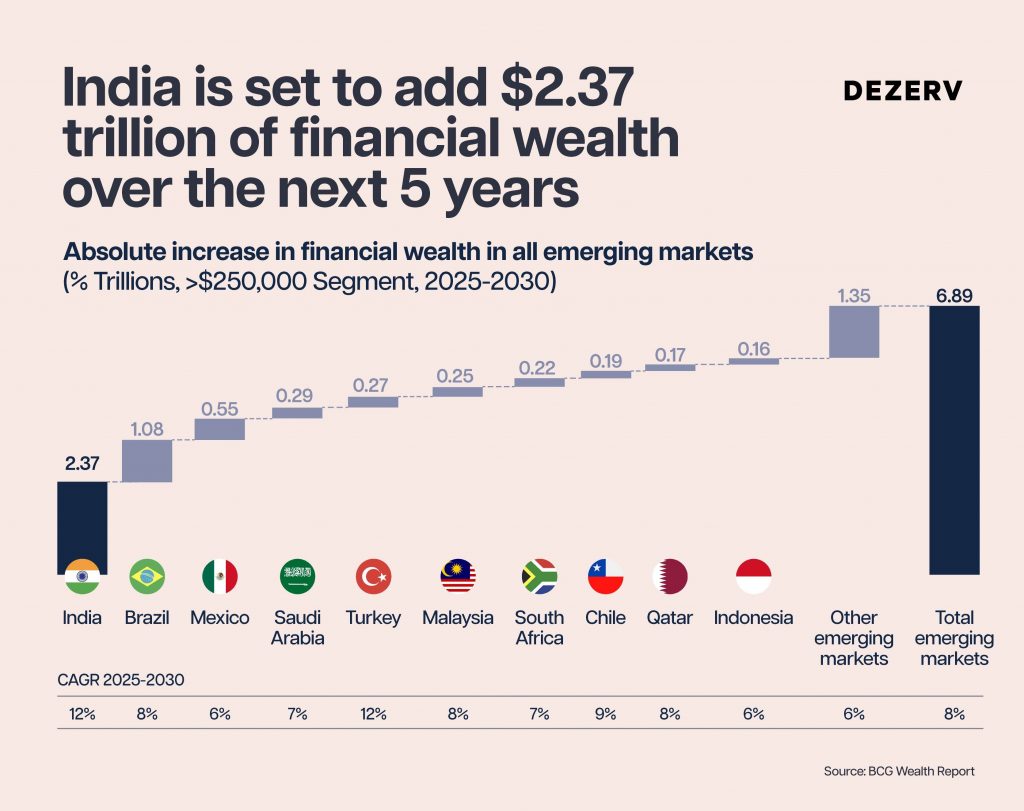
India is producing that kind of wealth, at a pace it has never seen before. Emerging markets will add nearly $7 trillion in financial wealth by 2030, and India alone accounts for $2.37 trillion of that, growing at 12% annually – that is more than double Brazil, nearly four times Mexico and ahead of any other emerging market combined.
What’s driving this isn’t one thing. India’s economy has been growing at 6-7% for years, and that growth is increasingly showing up in personal wealth. The startup ecosystem has matured, creating liquidity events through ESOPs, secondary sales, and IPOs. As a result, many founders and employees are holding far more wealth than previous generations did at the same age.
Corporate India has also expanded, creating a larger pool of senior professionals whose compensation includes equity alongside salary. Today, around 20% of Indian millionaires are under 40, and India added 26 new billionaires in 2024, compared with just 7 in 2019.
Managing this kind of wealth isn’t the same as managing a salary and some savings. It demands a different kind of attention, one most people creating this wealth don’t have the time for. So the question is no longer just where to put money, it’s how to manage it, which products to use, which relationships to trust, and how to tell the difference between advice that works for you and advice that works for someone else.
That’s what this edition is about, choosing the right wealth management model for you.
In this edition, we’ll cover:
- The four wealth management models in India and what each actually means for you
- What is a PMS and who should have access to it
- A practical map of which model fits which kind of investor
- A framework to choose the right wealth management model
- What technology can and cannot do for your wealth
The advisory gap
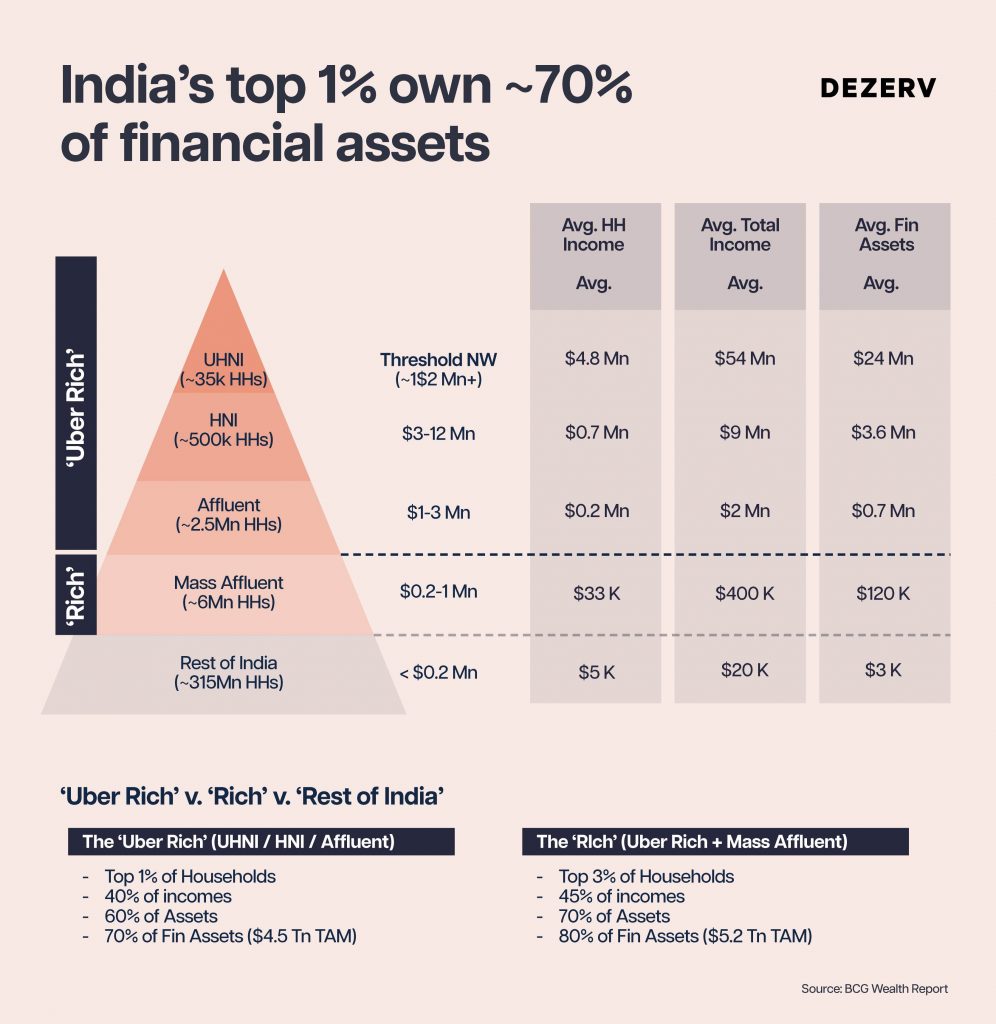
India’s HNI population is growing fast, from 850,000 today to a projected 1.65 million by 2027. We already rank fourth globally for individuals with assets above $10 million, behind only the US, China, and Japan.
But the more striking number is concentration. The top 1% of Indian households, roughly own close to 70% of the country’s financial assets. A small group controls a disproportionate share of the wealth that the entire wealth management industry exists to serve.
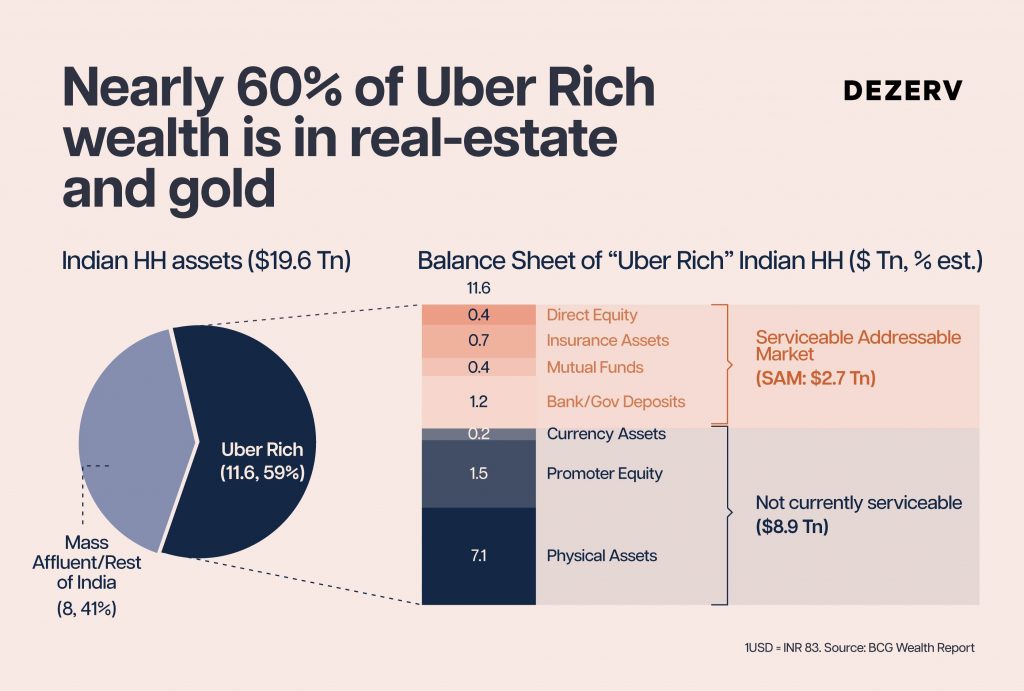
Of this group’s $11.6 trillion in total assets, only $2.7 trillion sits in things that need ongoing attention, equities, mutual funds, insurance, deposits. The rest is real estate, gold, and promoter equity, largely untouched for years. Every wealth manager, bank, and PMS provider in the country is effectively competing for a share of that $2.7 trillion.
And the people available to do this work are limited: 1.43 lakh AMFI-registered mutual fund distributors, roughly 9,000 active stockbrokers, 932 SEBI-registered investment advisors and just ~500 PMS managers. Relationship manager attrition at private banks and wealth firms has been close to 40% in recent years. Put simply: a small, concentrated pool of wealth is being chased by an even smaller, shrinking pool of people equipped to manage it.
If experienced advisors are this scarce, you may not get to choose freely and may end up working with whoever’s available. Which makes it worth knowing what each type of professional actually does, whether the structure they operate in aligns with the kind of advice you need, and where their role ends.
Understanding wealth management landscape in India
In India the term wealth management is not one-size-fits-all. There are different models that exist for a reason, and understanding what each one does, and does not do, is the starting point for making a good choice. Each operates under a different regulatory framework, earns differently, and serves a different purpose. Here is a breakdown of four main wealth management models in India.
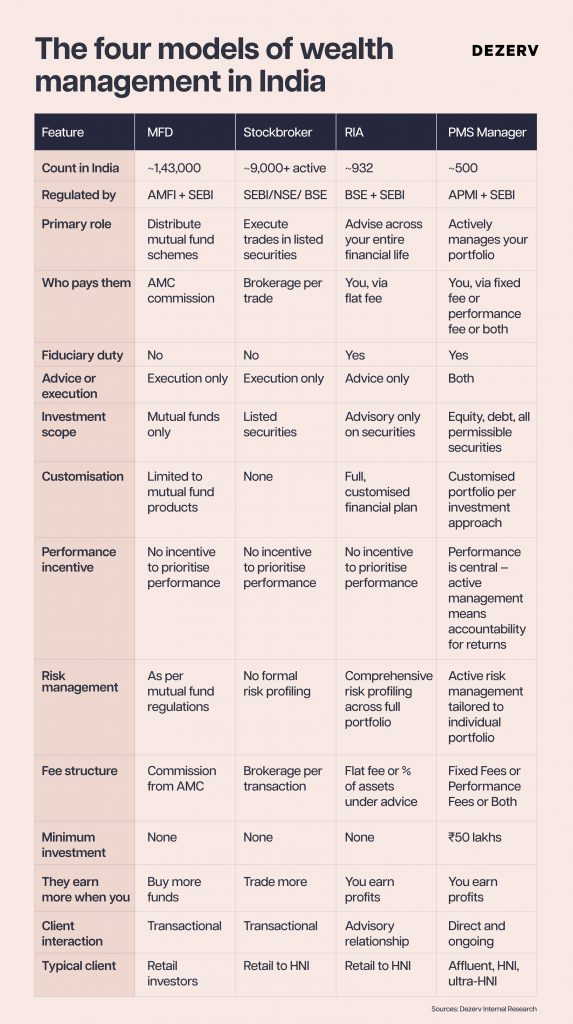
The Mutual Fund Distributor (MFD) is the most common model in India, and for good reason. The growth of SIPs, retail investing, and mutual fund participation has been driven in large part by the MFD network. MFDs are registered with AMFI, regulated by SEBI, and are compensated through commissions paid by mutual fund companies.
Their scope is largely limited to mutual funds and does not extend to direct equities, bonds, or most other investment products. While they may provide guidance, the investor ultimately decides what to invest in and is responsible for acting on those decisions.
A stock broker plays an even narrower role. They provide access to the market and execute trades on your instruction. They do not build portfolios, assess suitability, or provide ongoing wealth management. Their responsibility is execution.
A SEBI-Registered Investment Advisor (RIA) operates at a broader level. An RIA can help create a financial plan, recommend investments across different asset classes, and advise on portfolio construction. But, the advice stops at the recommendation stage. The investor is responsible for deciding whether to follow the advice and execute.
For investors who are engaged, have the time to monitor their portfolio regularly, and are disciplined enough to act on advice consistently, an RIA or a direct mutual fund approach works well.
A SEBI-registered Portfolio Manager takes the process one step further, they can make and execute investment decisions on your behalf. Under a discretionary mandate, the manager handles the day-to-day management of the portfolio, so you do not need to approve every transaction. This structure is designed for investors who want professional management of their wealth without being involved in day-to-day portfolio decisions.
Since PMS works differently from every other model in this landscape, in structure, accountability, and regulatory architecture, it’s worth understanding in more detail before making a decision.
Understanding the nuances of a PMS
The easiest way to understand PMS is to start with a simple question: in your current wealth management arrangement, who actually makes the investment decisions?
With a stockbroker, the answer is you, the broker executes what you tell them to. With an MFD, you decide which funds to buy and the distributor helps you transact. With an RIA, the advisor builds a plan and recommends what to do, but you decide whether to act on it and you execute it yourself. In each of these models, the final decision, and often the execution, rests entirely with the investor.
A discretionary PMS works differently. The portfolio manager analyses the portfolio, makes the investment decision, and executes it. You don’t have to approve each transaction and the accountability for what happens in the portfolio sits with the manager, not with you.
This matters most for investors whose time is genuinely scarce. Within PMS, the distinction that matters in practice is what the portfolio is built around, some PMS strategies invest predominantly in direct equities, while others are built largely around mutual funds as the underlying investment vehicle.
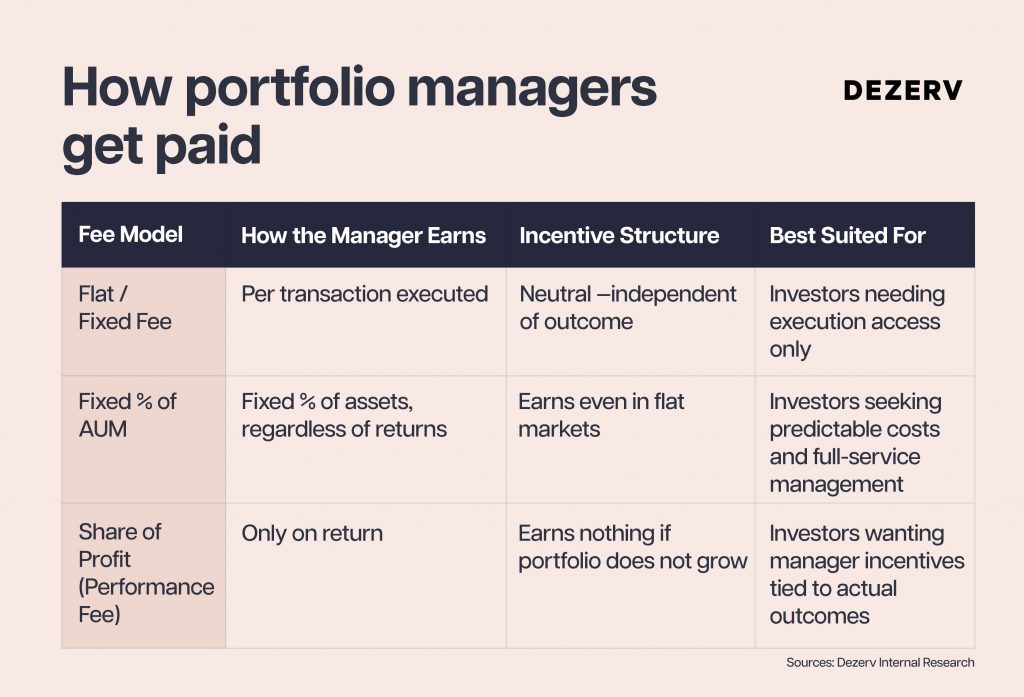
On fees, the structure varies across models and is worth understanding clearly because it shapes incentives. Some PMS providers charge a flat fee, others charge a percentage of assets under management, and many use a combination of a fixed fee plus a performance fee, where the manager earns more only if the portfolio crosses a predefined return hurdle.”
No fee structure is inherently better than another. The important question is whether the manager’s incentives are aligned with yours and whether you are comfortable with how they are being paid.
PMS does not change how your investments are taxed. The same capital gains rules apply as they would if you were investing directly. What matters is the holding period, not the structure. A well-run PMS is not trading for activity’s sake; portfolio changes are made only when the expected benefit outweighs the costs.
The regulatory protections under a SEBI-registered PMS are also worth knowing. Client assets are kept separate from the portfolio manager’s assets, performance must be reported in a standard format, and fees and conflicts of interest have to be disclosed clearly. The goal is to ensure transparency and investor protection through regulation rather than relying solely on trust in the manager.
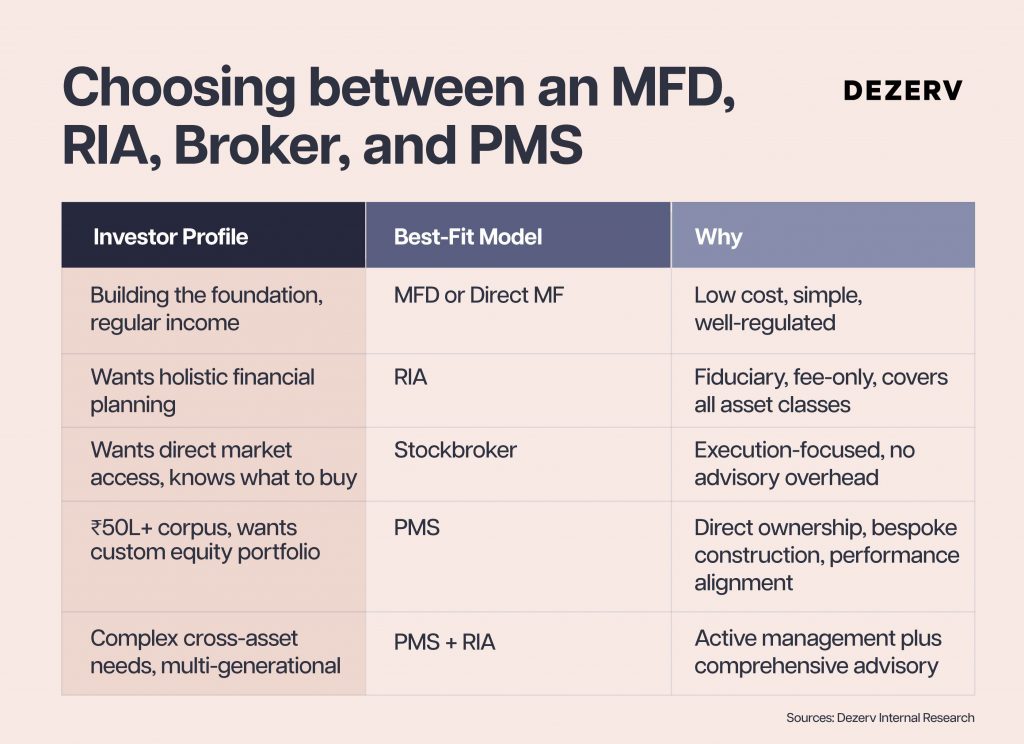
Which model is right for you: A simple map for a complicated choice
There’s no universal answer here. The right model depends on where you are in your financial journey, how much time, attention and decision-making you can realistically give to managing your portfolio, and what you actually need from the relationship. Here’s a rough map:
How to choose the right wealth model for you?
Most people who build significant wealth do so by becoming exceptionally good at something, running a business, building a career, or creating a product. But the skills required to create wealth are not always the same as the skills required to manage it. As wealth grows, protecting and investing it becomes a separate discipline that demands its own time, expertise, and attention.
Each model has its place and can work well for the right investor. Use the checklist below to identify the kind of support, involvement, and expertise you need from a wealth management arrangement.
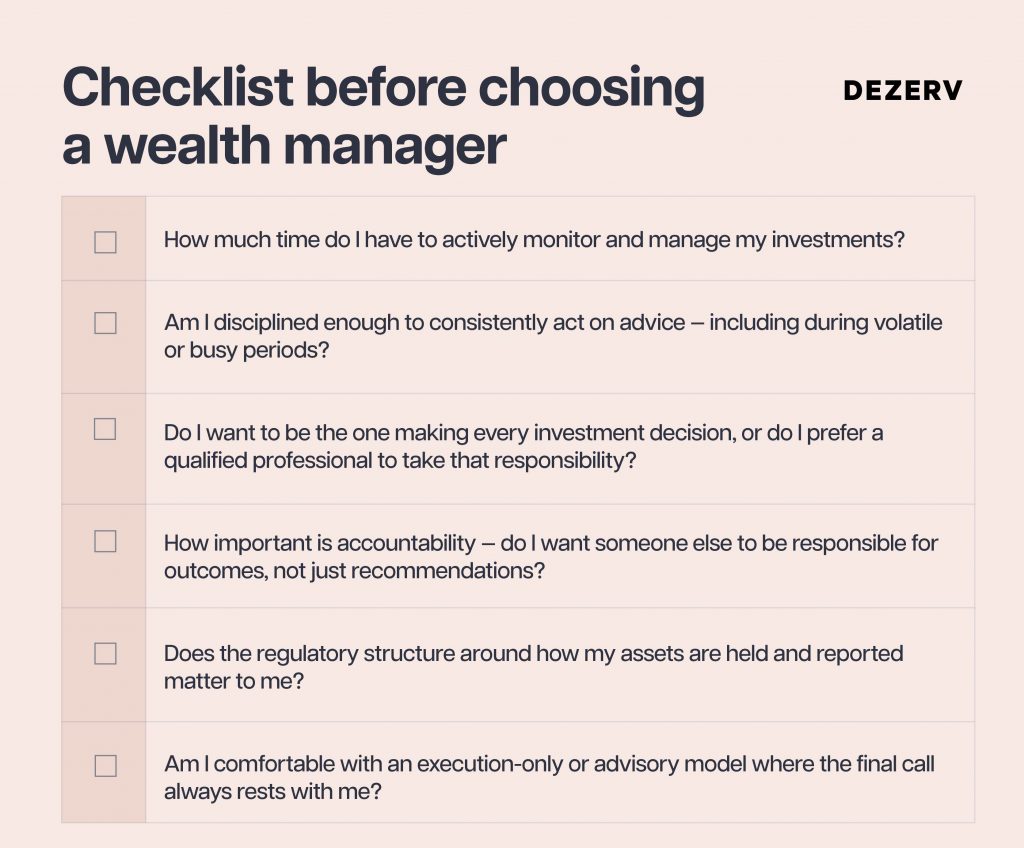
For investors who are busy running businesses or demanding careers and prefer to delegate day-to-day investment decisions, a discretionary PMS can be an effective structure. It allows a professional manager to handle portfolio decisions while the investor remains focused on their own work and priorities.
The future of wealth management: Can AI alone manage your wealth?
Earlier this year, a product announcement from a small US startup erased more than $140 billion of market value from several listed wealth management companies. The product was not a new fund or investment strategy. It was an AI-powered tax planning tool for financial advisors.
The market’s reaction reflected a growing belief that AI could reshape wealth management, not just make it more efficient. Two years ago, LLMs hallucinated too frequently to be trusted with client-facing tasks. Today, they are helping advisors draft financial plans, prepare portfolio reviews, automate compliance work, and streamline onboarding.
Industry estimates suggest AI could increase capacity by 25–30% in portfolio management and up to 55% in onboarding and compliance. Firms that adopt these tools early may also be able to serve more clients and improve revenue (15-20%) per advisor.
But the more important distinction, the one that gets lost in the noise, is that disruption is not displacement. The firms pulling ahead are not replacing advisors with algorithms. They are using AI to handle what is systematic, so that human judgment can focus on what actually requires it. For portfolio management specifically, that line runs roughly here:
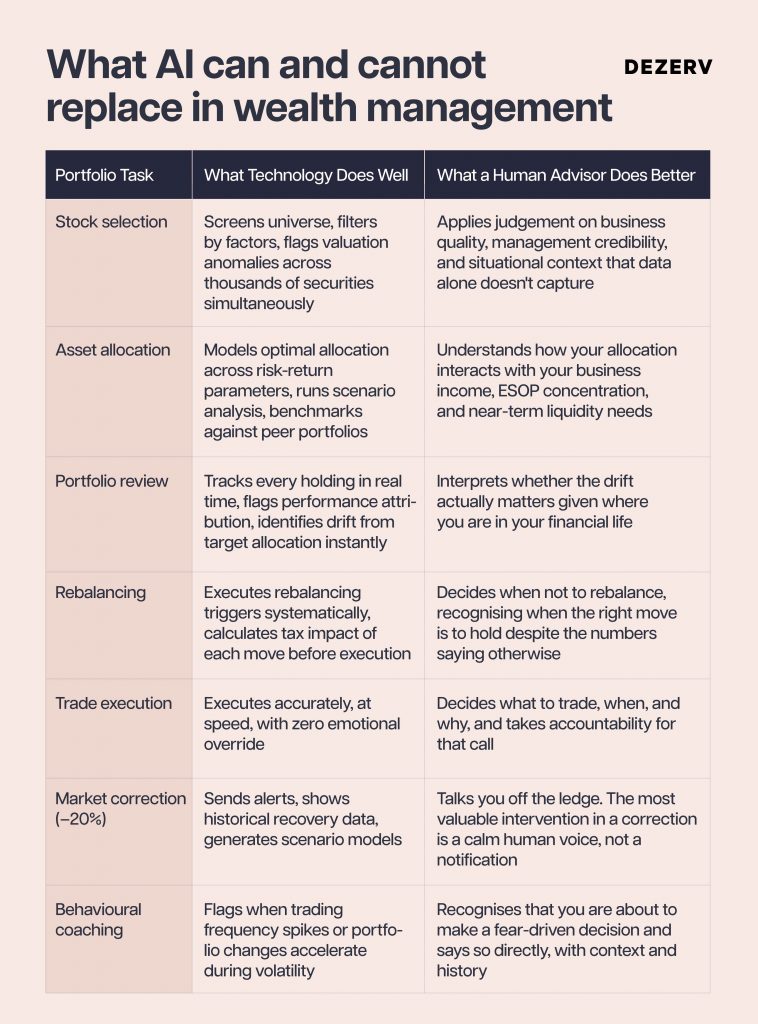
For investors, what this means practically is that the quality of a wealth management relationship is no longer measured by how much manual work the advisor does. It is measured by how well they use what technology handles automatically to focus their time on what actually matters, and how much judgment they bring to those moments when it counts.
In summary
Managing wealth well is not a one-time decision. It involves a continuous set of activities: finding the right investments, building the portfolio, deciding asset allocation, executing transactions, reviewing performance, and making adjustments as markets and goals change. When any of these steps are done poorly, the impact is rarely immediate. It shows up gradually over time through missed opportunities, unnecessary risks, and wealth that could have been created but wasn’t. The choice of who manages your wealth, and how, is one of the few financial decisions that shapes every other one that follows.
Disclaimer – Investment in the securities market is subject to market risks, read all the related documents carefully before investing. The information provided herein is intended solely for educational purposes and should not be construed as solicitation, advertising, or providing any financial or investment advice or an offer to buy or sell any financial instruments. Any statements about future developments are speculative and should not be taken as guarantees. Readers are advised to consult with their financial advisor before making investment decisions based on the information provided herein.
In the preparation of this document, Dezerv has used information developed in-house and publicly available information and other sources believed to be reliable. The information is not a complete disclosure of every material fact and terms and conditions. While reasonable care has been made to present reliable data in this article, Dezerv does not guarantee the accuracy or completeness of the data. The information / data herein alone is not sufficient and shouldn’t be used for the development or implementation of an investment strategy.
Any references to names of fund houses, investment securities, or asset classes are for illustrative purposes only. Dezerv, along with its directors, employees, or partners or any of its affiliates, shall not be held liable for any loss, damage, or liability arising from the use of this document. Additionally, all trademarks, logos, and brand names mentioned are the property of their respective owners and are used for identification purposes only. The use of these names, trademarks, and logos does not imply endorsement or recommendation.