

During Covid, a client of mine passed away. His wife, educated, capable, from a family that valued financial security, was suddenly in charge of a financial life she’d never been part of. She didn’t know the full picture of their assets. She discovered debts she had no idea existed. She didn’t know which parts of the portfolio to liquidate to repay them, which ones would trigger tax events, which ones had lock-ins. The first few months weren’t just grief. They were paperwork, passwords, and phone calls to people she’d never spoken to.
She figured it out. She’s now one of the most financially engaged people I work with. But it cost her months, money, and peace of mind she’ll never get back. This newsletter is about making sure no woman has to learn this way.
And on the occasion of International Women’s Day, I want to make the case, with complete conviction, that financial control is not a privilege Indian women should aspire to. It is a necessity they can no longer afford to defer.
In this edition
- The confidence-action gap: Why intent isn’t translating into ownership
- How do women fare across three Important aspects of finance?
- Why the gap persists: The system that wasn’t designed for her
- The longevity reality: The financial timeline no one talks about
- What’s changing: The shift is already happening
- The non-negotiable checklist: Five things every household must get right
- A note for men: The single most impactful thing you can do
The confidence – action gap
Here’s what’s puzzling. If you survey Indian women today, 84% say they’re confident enough to make their own investment decisions, a number that has climbed significantly in just three years. Women are more financially aware, more digitally active, and more vocal about wanting control of their money than at any point in our history.
And yet: 45% still take a backseat on investment decisions. 57% feel they’re not making the best choices. 42% say someone else in the household is simply better at it.
The confidence is there. The action isn’t. That gap between knowing and doing is where the real problem lives. And it’s worth asking: if intent is no longer the barrier, what is?
To answer that, it helps to first understand where women actually stand, not in terms of confidence or intent, but in terms of real financial behaviour and outcomes.
How do women fare across three Important aspects of finance?
1) Investing : Research from Fidelity, one of the world’s largest fund houses, consistently shows that women outperform men as long-term investors, and the reasons are structural to how women invest: they trade less, they hold longer, and they are less prone to the overconfidence bias that causes men to churn their portfolios at exactly the wrong moment. This long-term orientation is closely tied to the growing adoption of SIPs. SIPs, by design, automate discipline, they reduce the temptation to time the market and turn investing into a monthly habit rather than a series of emotional decisions. And women are embracing this structure at scale.
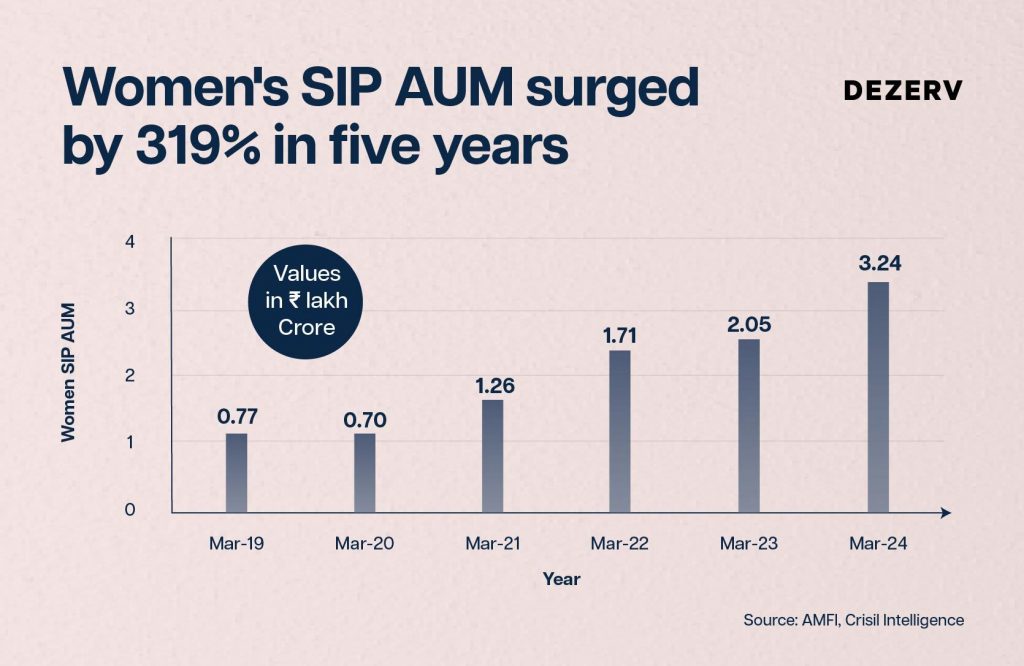
Women’s SIP AUM surged by 319% in five years, from ₹0.77 lakh crore in March 2019 to ₹3.24 lakh crore by March 2024. Today, women account for over 30.5% of India’s total SIP AUM.
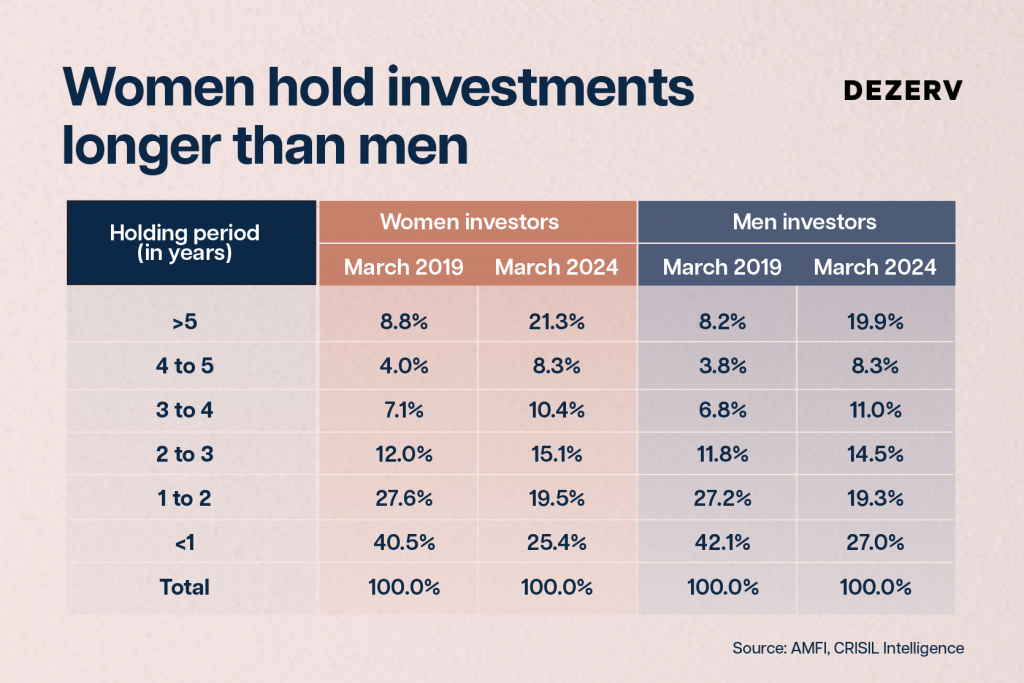
And while both men and women are holding investments longer, women are slightly more committed to the long game. The share of new money (held less than one year) dropped significantly for women, from 40.5% to 25.4%, indicating they are staying invested rather than entering and exiting frequently.
When women decide to invest, they commit more. This is not what the conventional narrative about cautious, risk-averse women investors would predict. The evidence points to an investor who thinks carefully before acting, and then acts decisively.
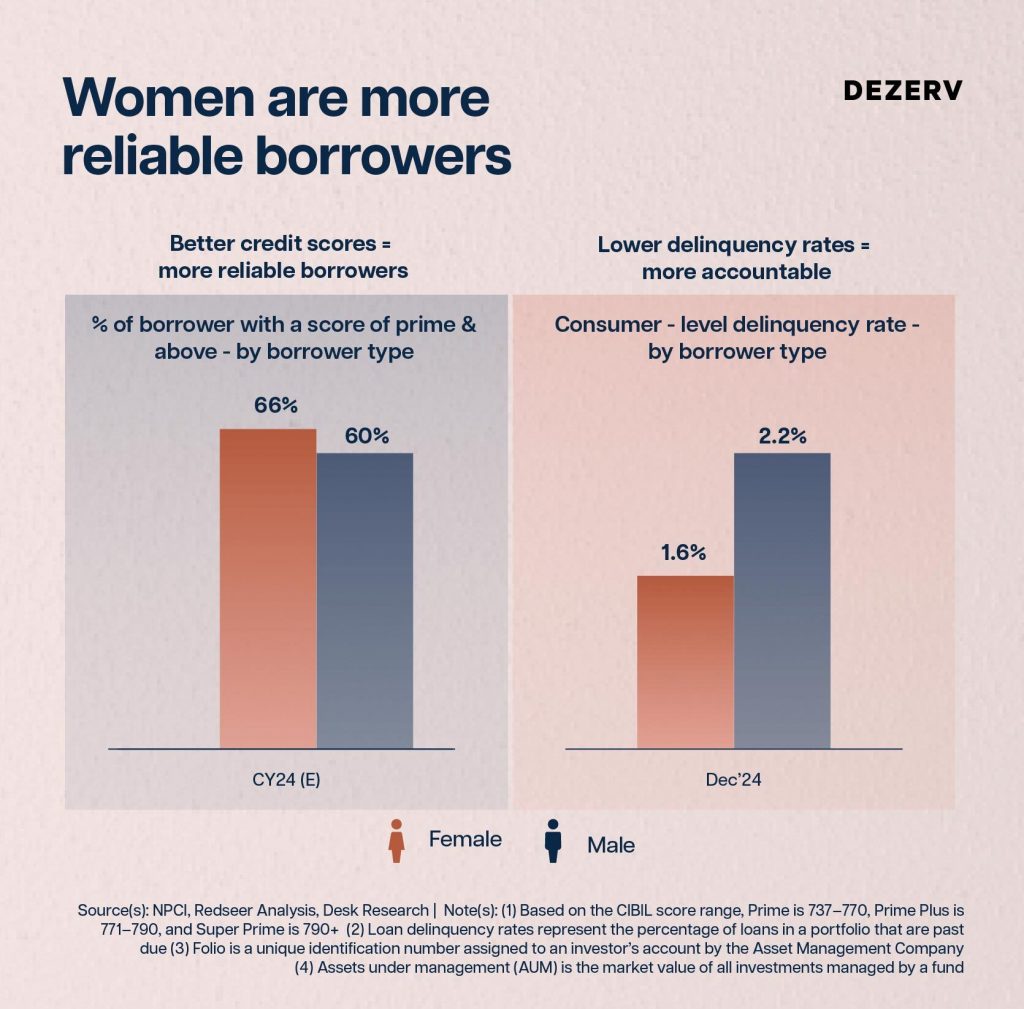
2. Borrowing: The same discipline shows up in credit behaviour. In India, 66% of women borrowers have a credit score of prime or above (737-900), compared to 60% of men. Their delinquency rate is 1.6%, versus 2.2% for men. More reliable borrowers, more committed investors, the capability signal is consistent across every dimension of financial behaviour.
3) How women spend and save: Women are better savers and more disciplined spenders, driven by higher risk aversion and a focus on long-term goals. They favour steady growth over high-risk bets, only 8% are willing to maximise returns if it involves higher risk, and most are unwilling to risk their principal capital for a chance at higher gains. Nearly half prefer low-risk options with moderate growth: they want to see their money grow, but not at the expense of their peace of mind.
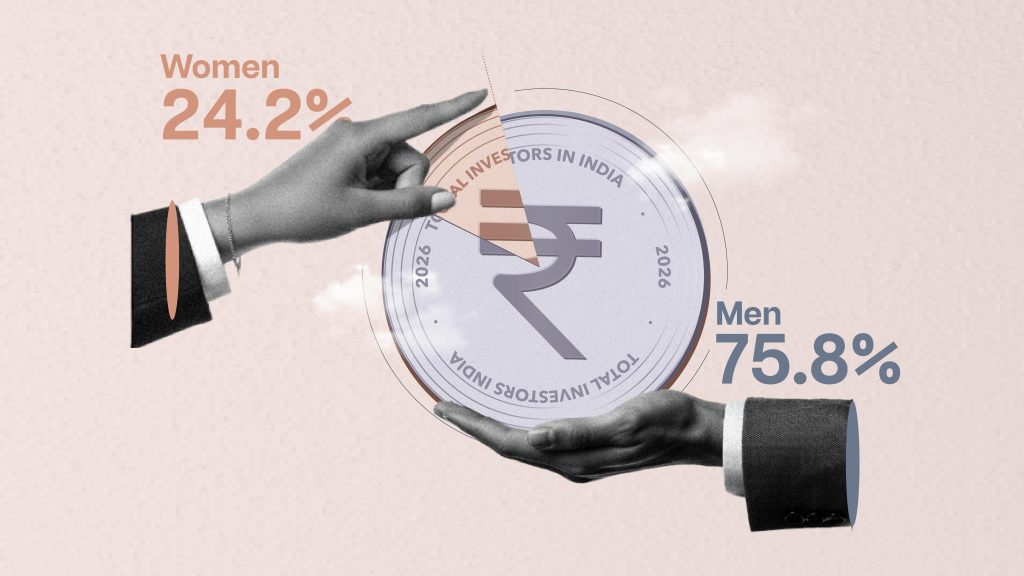
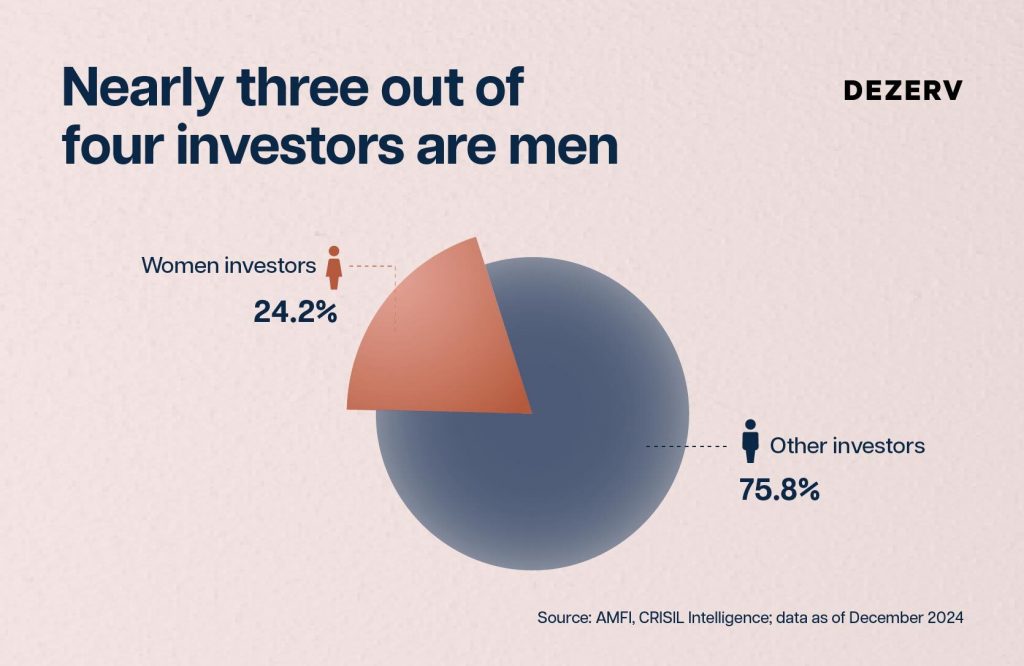
Now hold that capability alongside this reality: Men hold a massive 75.8% share of the investor pool, while women account for only 24.2%. Even among high-net-worth women, those with ₹10 crore or more in net worth, less than half are strongly involved in their family’s investment decisions.
And yet, the desire is clearly not the problem. In surveys of HNI women conducted by an investment advisory firm, 95% express strong interest in investing across diverse asset classes. It’s the activation that is missing. This gap between capability and control is not a talent gap. It is a participation gap.
And understanding where it comes from is the first step to closing it.
Why the gap persists: The system that wasn’t designed for her
It’s not one thing. The barriers are layered, and they interact in ways that are easy to miss when you’re looking for a single cause.
The household default. 65% of women who don’t decide alone say their spouse is the primary decision-maker. For many households, this isn’t oppression, it’s how things are. He was interested, she wasn’t, and over time the division of labour calcified. But convenience becomes vulnerability the moment circumstances change. And circumstances always change.
The generational handoff. Financial behaviour is learned behaviour, and it is passed down. Even well-intentioned parents unconsciously steer daughters toward savings accounts and sons toward investment accounts. The gap often begins before a woman has ever held a job.
The growing opt-out. Here’s the number no one is talking about: the percentage of women who have never attempted to learn about investing actually increased, from 10% to 14%. While the headline story is empowerment, there is a minority moving in the opposite direction. No one is talking about them.
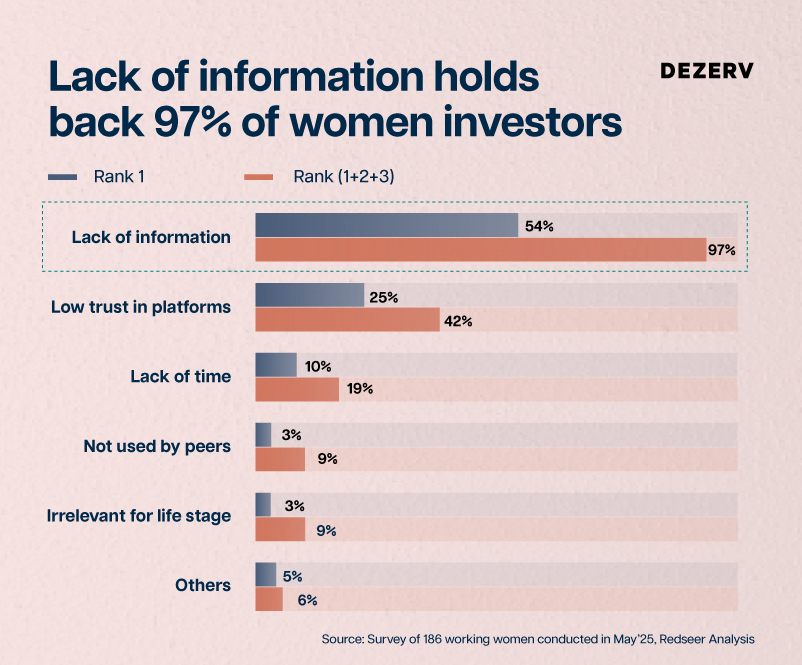
Information is not neutral. 97% of women cite a ‘lack of information’ as a primary reason for hesitancy in trying new financial products and not a lack of interest. Interest is not the problem. The problem is that financial products and their communication have historically been built around male archetypes: men as earners, investors, and protectors. Women are more visible in ads today, but are rarely shown as primary financial decision-makers. Family-focused messaging dominates over women’s personal financial goals, with little product tailoring for their unique needs.
The longevity reality
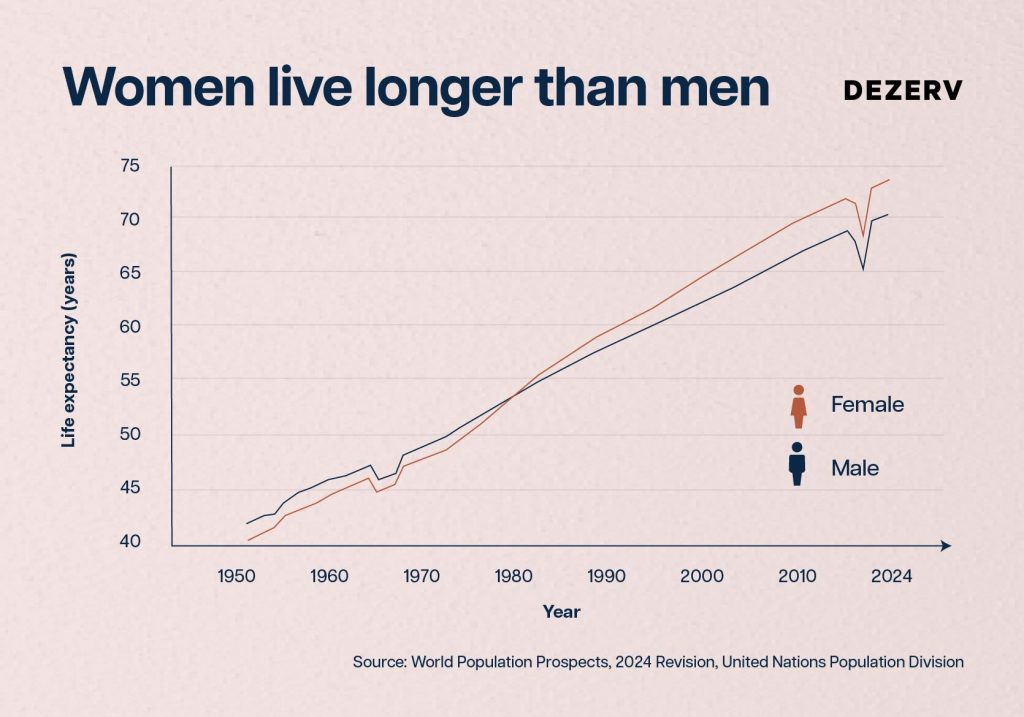
Indian women outlive men by 3 to 5 years on average. In most households, there will come a point, not might, will, where she is the sole financial decision-maker.
My client’s wife was 47 when that moment arrived. She could have 30 to 40 more years of financial life ahead of her. That is not a footnote. That is potentially the longest relationship she will ever have with money, longer than her career, longer than her marriage.
9% of women who became sole decision-makers were forced into it by unforeseen events, death, divorce, a spouse’s illness. That number is rising. And the cost of being unprepared is not just emotional. When you don’t understand your portfolio, you liquidate the wrong asset. You pay avoidable taxes. You trust the first person who offers help because you don’t have a framework to evaluate their advice. The financial cost of not knowing compounds, just like the investments themselves.
And for a male CXO or founder reading this: the wealth you are building right now has a significant probability of being managed, eventually, solely by your spouse. If she has never been in the room when investment decisions are made, you have left her structurally exposed at the most vulnerable point in her life.
Familiarity with a portfolio cannot be built overnight during grief. Financial confidence is not a switch. It is built through years of involvement, and the window to build it is now, not later.
But things are changing
Today, one in every four unique individual investors in Indian mutual funds is a woman. Women making independent investment decisions jumped from 44% to 56% in three years. Their mutual fund AUM more than doubled in five years, from ₹4.59 lakh crore to ₹11.25 lakh crore. The pace of change in women’s financial participation over the last decade is one of the most underreported economic stories in India.
And it’s happening across multiple fronts simultaneously.
1. The leap to financial Inclusion
Financial independence begins with access, and women are no longer on the sidelines of the formal banking system. The percentage of women owning and using a bank account jumped from 53% to 79%, and of all bank accounts opened under the Pradhan Mantri Jan Dhan Yojana, a majority, 29.56 crore accounts, belong to women. Female literacy is also rising faster than male literacy, reaching 74.6% in 2024, which directly correlates with better financial decision-making.
2. From gold to stocks: Breaking the traditional mould
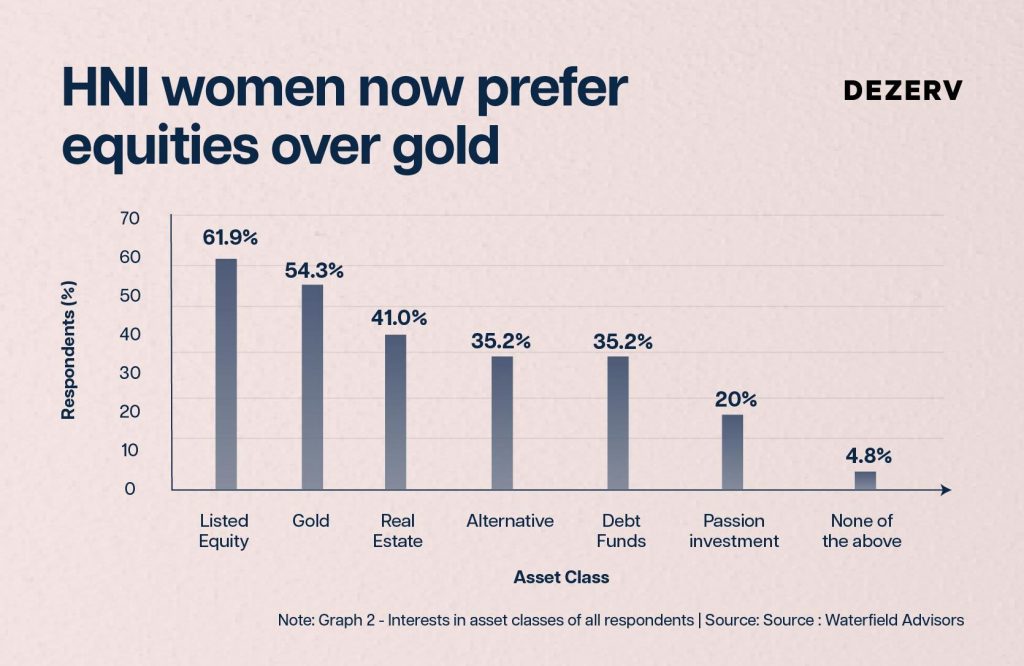
The traditional portfolio of gold jewellery and property is being traded in for a digital dashboard of stocks and professional funds. Listed equity has overtaken gold as the top asset class for HNI women, 61.9% now prefer listed equities over gold or real estate as their primary asset class. This shift signals growing financial confidence and market literacy.
4. Tech-Savviness as an Empowering Tool
Between 2014 and 2021, the percentage of women making digital payments doubled from 14% to 28%, outstripping the growth rate of men. Mobile internet adoption among women rose to 37% in 2023, providing fertile ground for app-based investing. The digital divide is closing fast, making it easier for women to take control of their portfolios from their smartphones.
5. The geographical footprint of financial inclusion
Importantly, this shift is not a metropolitan story. Women investors in tier-4 cities grew by over 140% in 2024 alone. Young women under 35 in smaller cities account for a significantly larger share of AUM than their counterparts in major metros.
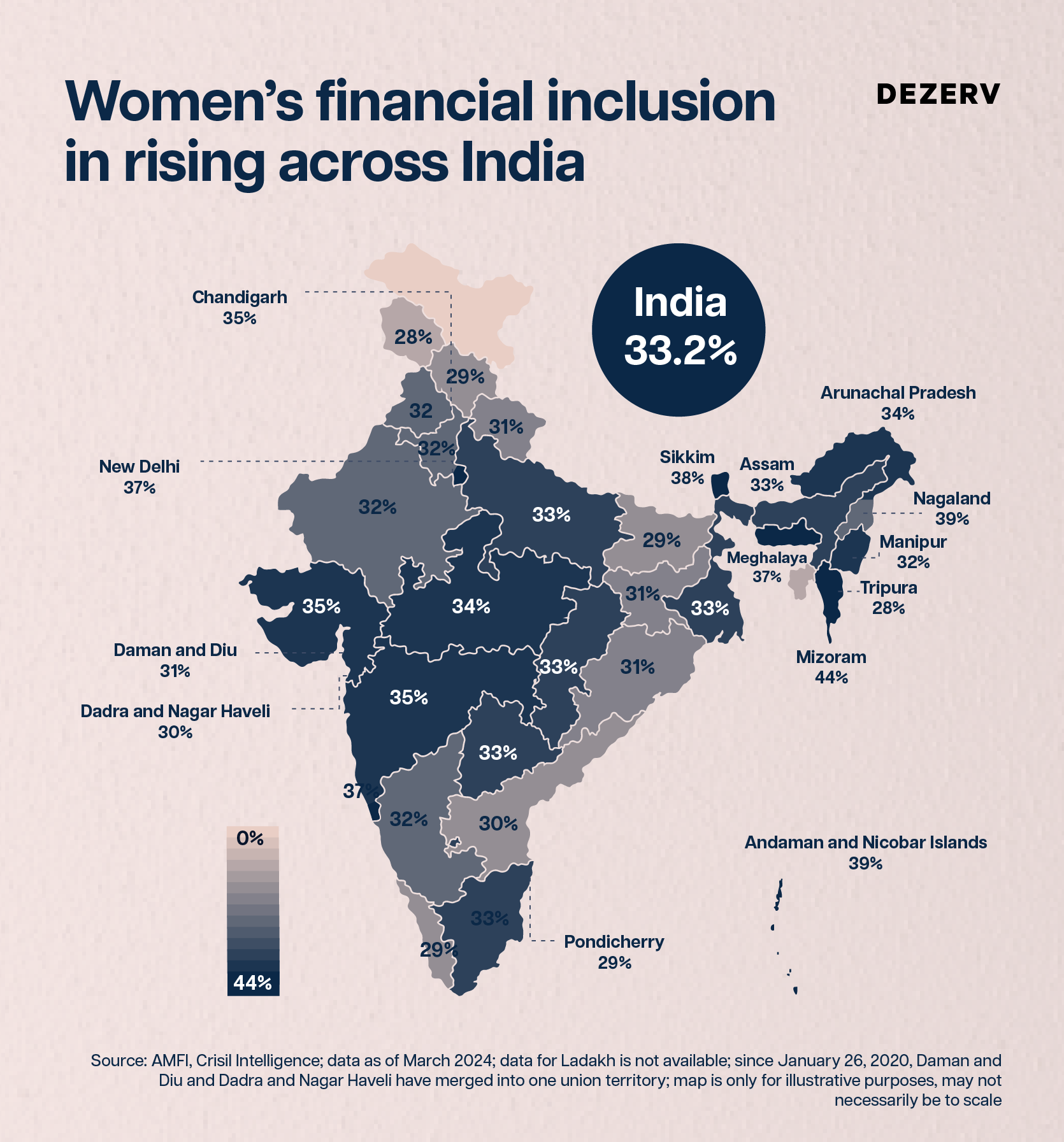
And here is the data point that tells you this is also cultural: in matrilineal states like Mizoram and Nagaland, women’s investment participation is the highest in the country, 44% and 39% respectively. Where culture gives women financial agency, they take it.
What’s driving the shift everywhere else? Women increasingly associate money with freedom, that number jumped from 28% to 35% in three years. Among younger unmarried women, 78% prioritize financial independence over marriage stability.
Again the desire is there. The infrastructure at home needs to catch up.
The household conversation: A non-negotiable checklist
Start this weekend. These are five questions every household should be able to answer and both partners should know the answers, not just one.
- Where is all the money? Every account, every instrument, every login, every nominee.
- Are you listed as a nominee on your partner’s accounts, bank, demat, insurance, PF? Is your partner listed on yours? When did you last check?
- What debt exists? Who’s servicing it? What happens to it if circumstances change?
- What insurance exists, and what does it actually cover?
- Is there a will? Is it updated?
- Are investment decisions reflecting her goals too, or just the household’s?
- Do you have even one demat account in your own name: a SIP, or a mutual fund folio.
The goal isn’t to upend who does what overnight. It’s to make sure no one is ever blindsided. She should be able to walk into any room, with any advisor, any banker, any lawyer, and know exactly what she owns, what she owes, and what she wants.
A note for men
Here’s something the data made very clear: the single fastest-growing reason women start making independent investment decisions isn’t a course, an app, or a government initiative. It’s their partner encouraging them. That number jumped from 14% to 18% in just three years.
So if you’re the man in the household who handles the money, your role isn’t to keep handling it better. It’s to stop being the single point of failure. That’s not strength. It’s a risk you’re creating for your family.
Start by sharing. Women are already more financially transparent than you might think, 65% share their salary details with their partner, versus 58% of men. The openness is already there. Match it.
And this goes beyond your spouse. The data shows that even progressive mothers are unconsciously steering daughters toward savings over investments. Financial literacy is inherited behaviour, the version you model and pass on, to your wife, your daughter, your mother, your sister, matters more than any financial product they’ll ever be offered.
The research is clear on what actually changes a woman’s financial engagement. It is not a compelling ad, not a financial influencer, and not a government scheme.
It is family validation. The most powerful trigger for a woman’s financial engagement is the support and active involvement of the people closest to her.
Here is what that looks like in practice;
- Giving access before giving advice, sharing the portfolio, the login, telling her where things are.
- Framing an investment around something she actually cares about.
- Having a simple conversation: ask her what she wants the money to do, and let her lead that part.
Financial independence is not just about the numbers in a bank account. It is the freedom to make decisions, to bear the weight of uncertainty, and to live life on your own terms. Women already have the capability, the discipline, and the intent. Now it is time to claim ownership.
This Women’s Day, don’t just celebrate how far you’ve come. Make sure you have a hand on the wheel for where you’re going.
Disclaimer – The information provided herein is intended solely for educational purposes. In this material, Dezerv has utilized information through publicly available sources, and other data deemed to be reliable. All trademarks, logos, and brand names mentioned are used for identification purposes only and do not imply endorsement or recommendation.