



Stay updated
with our newsletter
Highlights
- Rescue impact: Vantara has rescued over 200 elephants and thousands of other animals — demonstrating private sector’s capacity to scale premier rehabilitation efforts
- Afforestation drive: India implemented compensatory afforestation on 930,000 hectares between 2008–2023 despite diverting 300,000 ha for development — underscoring national commitment to ecosystem restoration
- Tourism revenue: Ranthambore Tiger Reserve generates INR 217 crore annually from wildlife tourism — highlighting forests’ direct contribution to local livelihoods and regional GDP
- Green finance: India issued INR 16,000 crore in sovereign green bonds in FY23 and plans INR 20,000 crore more in FY25 — unlocking large‑scale capital for forest conservation and climate resilience
Welcome to this week’s edition of the Create Wealth newsletter.
The global guest list, extravagant jewellery and Bollywood presence at the recent pre-wedding celebration of Anant Ambani have caught the attention of the entire country.
What most really missed out on was Vantara – the real gem.
Vantara, Anant Ambani’s ambitious wildlife project spread over 3000 acres in Jamnagar, Gujarat, claims to be the world’s largest wildlife rescue and rehabilitation centre.
In this newsletter, we take a tour through India’s forest economy as we uncover synergies between economic development and environmental stewardship and understand the transformative potential of initiatives like Vantara in leading the way towards a greener, more sustainable future.
A deeper dive into Vantara
The genesis of Vantara is rooted in Anant Ambani’s vision to create a sanctuary that not only rescues and rehabilitates animals but also serves as a centre for biodiversity conservation, research, and education.
This initiative represents a substantial investment in the future of India’s natural heritage, with the project’s costs reflecting its scale and ambition.
While specific figures are closely held, the investment in land, infrastructure, and state-of-the-art facilities designed to house and care for a wide range of species underscores the project’s extensive financial and logistical undertakings.
Here are some key highlights from the project:
- Location and size: The centre is within the green belt of Reliance’s Jamnagar Refinery Complex in Gujarat, covering an expansive area of 3,000 acres.
- Rescue efforts: Vantara has been instrumental in rescuing more than 200 elephants and thousands of other animals, including reptiles and birds, from unsafe conditions.This facility includes a 25,000-square-foot elephant hospital, one of the largest of its kind globally. It also features a 14,000-square-foot kitchen for preparing curated diets for the elephants.
- Rehabilitation centre: This centre spans 650 acres within the Jamnagar refinery area and includes a 1,00,000-square-foot hospital and medical research centre.
The Vantara initiative exemplifies how targeted financial investment and passionate leadership can create a lasting impact on conservation efforts and the forest economy.
The value of forests in India
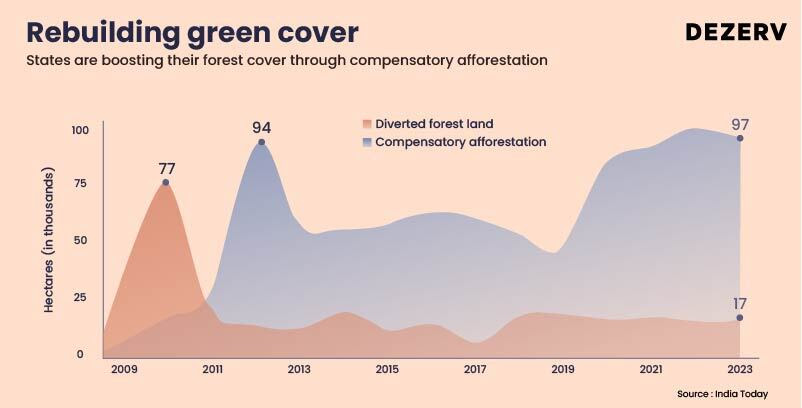
Approximately 9.3 lakh hectares of land underwent compensatory afforestation initiatives between 2008 and 2023.
Despite diverting over 3 lakh hectares of forest land for infrastructural and industrial projects in the past 15 years, the focus on replenishing forest cover highlights India’s commitment towards forest conservation.
Forest-based industries not only support a large number of livelihoods but also contribute significantly to the national economy.
Emerging wood-based products have the potential to generate an additional revenue of EUR 18–75 billion per year by capturing a 1–2% market share in major forest industry countries is a testament to the untapped economic potential within the sector.
Biodiversity conservation funding further illustrates the financial dimensions of forest conservation in India.
With finances from 116 schemes across 24 Union ministries and 29 departments, approximately INR 20,000 crore per year is allocated towards conservation efforts.
However, the estimated requirement for implementing India’s National Biodiversity Action Plan stands at around INR 90,000 crore (USD 12 billion) annually, indicating a significant gap that needs to be addressed to realise the conservation goals fully.
The 2022-2023 Union Budget allocated INR 3,030 crore to the Ministry of Environment, Forests and Climate Change (MOEFCC), with specific allocations for flagship conservation programs such as the Green India Mission, Project Tiger, and Project Elephant.
These allocations underscore the government’s commitment to preserving India’s rich biodiversity and forest cover.
Wildlife wealth
Wildlife not only contributes to the country’s rich biodiversity but also plays a pivotal role in bolstering the local and national economy.
The Ranthambore Tiger Reserve is a testament to the success of wildlife conservation efforts and their economic implications.
The reserve, renowned for its thriving tiger population, attracts tourists from across the globe, eager to catch a glimpse of these majestic creatures in their natural habitat.
Wildlife tourism from Ranthambore contributes over INR 217 crore annually to the local economy.
This influx of revenue supports a variety of livelihood opportunities, including jobs in tourism supply chains and the hospitality industry, such as drivers and nature guides.
A 2019 study across 10 tiger reserves estimated the monetary value of benefits from protected areas to range between USD 600 million to USD 2 billion annually, translating to USD 5,000 to USD 9,000 per hectare per year.
Global impact of wildlife tourism
- Yosemite National Park, United States: Approximately 4 million visitors annually support 6,184 local jobs, according to a 2018 U.S. National Park Service report.
- Kruger National Park, South Africa: Attracts around 1.9 million tourists annually, contributing over USD 1.5 billion to South Africa’s GDP.
- Chitwan National Park, Nepal: Achieved zero poaching for three consecutive years (2018-2020), demonstrating the positive conservation outcomes that can accompany economic benefits.
Economic prosperity through sustainable practices
Investing in forest conservation and sustainable practices offers a pathway to economic prosperity through several mechanisms:
- Enhanced ecosystem services: Forests provide critical ecosystem services such as water purification, climate regulation, and soil conservation.These services are indispensable for agriculture, water resources management, and disaster risk reduction, contributing significantly to the national economy.
- Sustainable livelihoods: Forests are vital for the livelihoods of millions, especially in rural areas.Sustainable forest management and promoting Non-Timber Forest Products (NTFPs) can provide significant income opportunities while ensuring biodiversity conservation.
- Climate change mitigation: As natural carbon sinks, forests are crucial in absorbing CO2 from the atmosphere.Investment in forest conservation is not only a climate action measure but also opens up opportunities for international funding and participation in carbon credit markets.
- Tourism and recreation: Well-conserved and managed forests attract tourists, fostering eco-tourism and recreational activities.These sectors generate revenue and support local economies, showcasing the economic benefits of investing in forest conservation
Investing in India’s forest economy – Green bonds
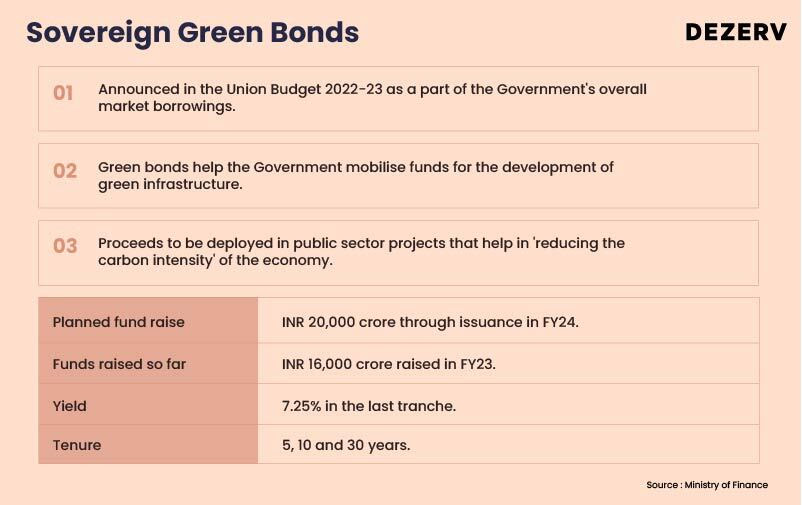
In the Union Budget 2022-23, the Finance Minister announced the issue of Sovereign Green Bonds (SGrBs) for mobilising resources for green infrastructure, which includes forest cover.
Green bonds are government securities that can be used to finance projects such as:
- Renewable energy
- Sustainable agriculture
- Pollution prevention and control
- Fishery and forestry
- Clean transportation
- Water and waste management
These bonds have a similar coupon as corporate government bonds with the same tenure. They are long-term bonds with maturities of 5, 10 and 30 years.
On January 25, 2023, India issued the first tranche of its first SGrBs worth INR 8,000 crore.
The government issued green bonds worth INR 16,000 crore in FY23 and plans to raise another INR 20,000 crore via such bonds in FY25.
By incorporating green bonds into its climate finance strategy, India is taking a significant step towards achieving its environmental and economic objectives.
For investors, green bonds represent a unique opportunity to be part of India’s journey towards a sustainable future, contributing to the conservation of its forests and securing financial returns.

Written By