




Stay updated
with our newsletter
Compared to traditional fixed-income instruments such as fixed deposits, debt mutual funds and bonds, the private credit space aims to deliver higher post-tax returns.
There are 3 popular forms of Private Credit:
1. Venture debt
2. Distressed debt
3. Performing credit
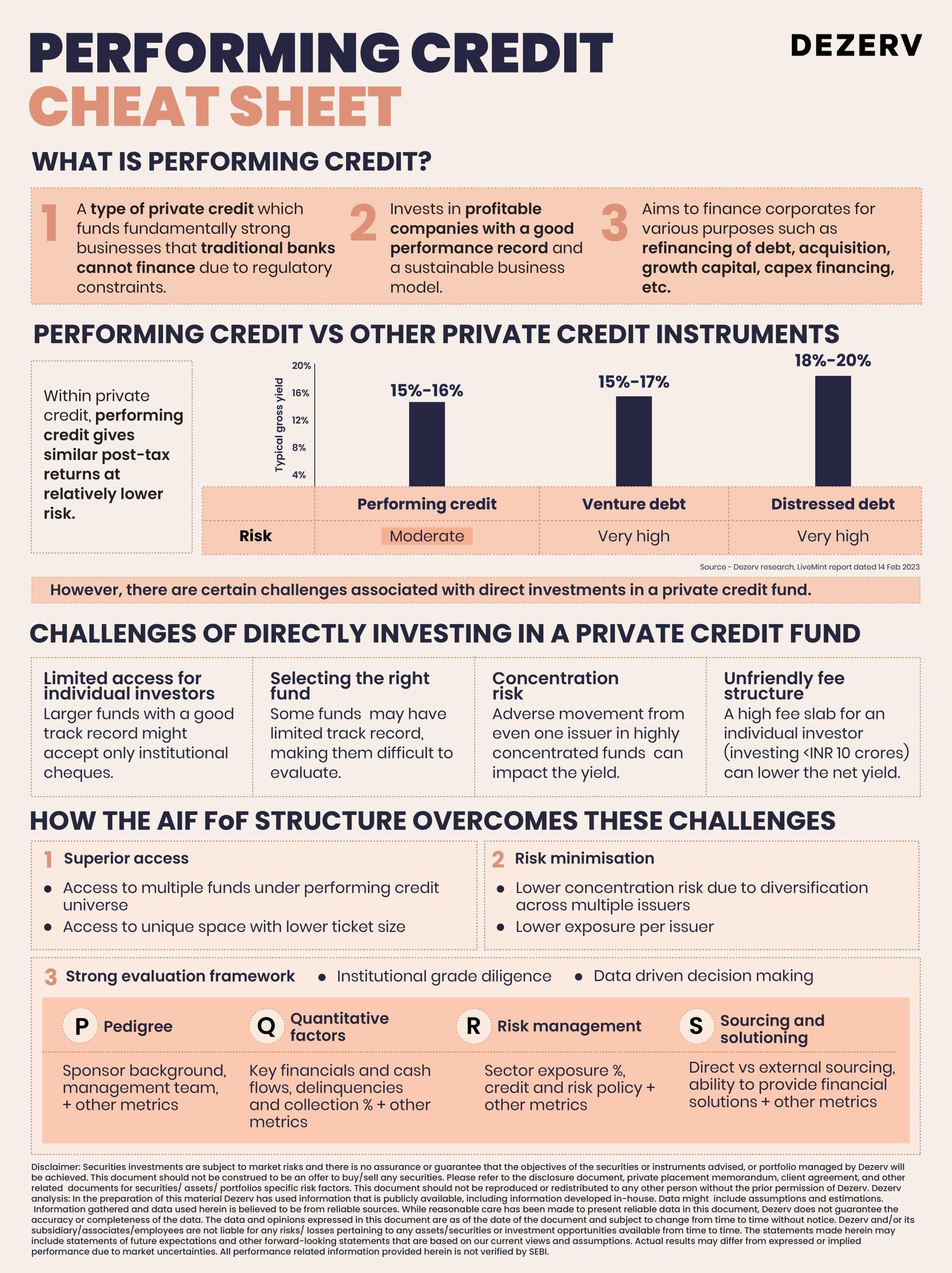
We at Dezerv believe that Performing Credit offers opportunities to make similar returns compared to venture debt and distressed debt with relatively lower risk.
How can you invest in Performing Credit?
The Alternative Investment Funds (AIF) Fund-of-Fund (FoF) structure to invest in Performing Credit has 2 major advantages –
1. Superior access – access to multiple funds under Performing Credit universe
2. Risk minimisation – Lower concentration risk due to diversification across multiple issuers (lower exposure per issuer)
You need to be mindful of the fact that AIFs require a minimum investment of INR 1 crore.
Here’s a simple explainer to help you understand Performing Credit –

Written By