
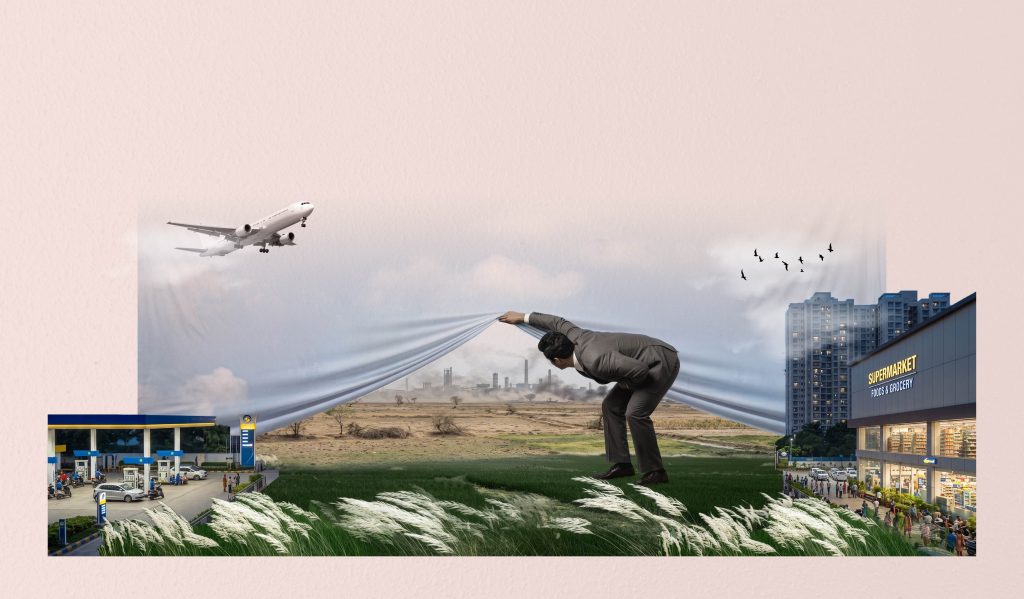

In January 1979, the Shah of Iran boarded a plane out of Tehran and never returned. In the revolution that followed, much of Iran’s oil industry shut down, and crude prices roughly doubled around the world.
India depended heavily on imported oil, so it felt the impact quickly. The import bill began to swell at a time when the country was already in political turmoil, and by July the Janata government had fallen.
Then the monsoon failed. The rains, that summer, came in nearly 19% below normal. Crops withered across large parts of the country, and by the following spring drought was affecting 220 million people. In the 1980 Budget, the Finance Minister had to tell Parliament that prices had risen by 20% in a single year.
It’s easy to think of that as distant history. But this year, almost the same sequence played out again.
At the end of February 2026, strikes on Iran shut the Strait of Hormuz, the passage that carries about half of India’s crude oil. Within a month, the price India pays for a barrel of crude jumped from $69 to $126. Then, at the end of September 2026, a strong El Niño left the monsoon 12.6% below normal, the weakest in more than a decade.
The difference is that India went into this crisis much better prepared. Inflation was at its lowest in years, which gave the government room to soften the blow, and for a few months it looked as though most Indians would hardly notice the shock.
That didn’t last. The cost of oil has spread into fertiliser, food and airfares, the weak monsoon has pushed food prices higher, and by August retail inflation had climbed to 4.82%. On 7 October 2026, the RBI raised the repo rate from 5.25% to 5.5%, its first hike in more than three and a half years.
And the coming months matter more than the ones behind us. Inflation is still climbing, El Niño is expected to last into January 2027, and the RBI has ruled out rate cuts for now. In today’s newsletter, I’ll break down what’s pushing prices up, where the pressure is showing first, and what it means for your loans, savings and investments, so you know what’s happening at home and around the world before the pressure builds further.
In this edition:
- Why India’s inflation stayed low for months, and why that is changing now
- How expensive oil moved from the petrol pump to everything else
- Why food prices are rising from two directions
- What the RBI’s first rate hike since 2023 means for your money
Why India’s inflation stayed low for months, and why that is changing now
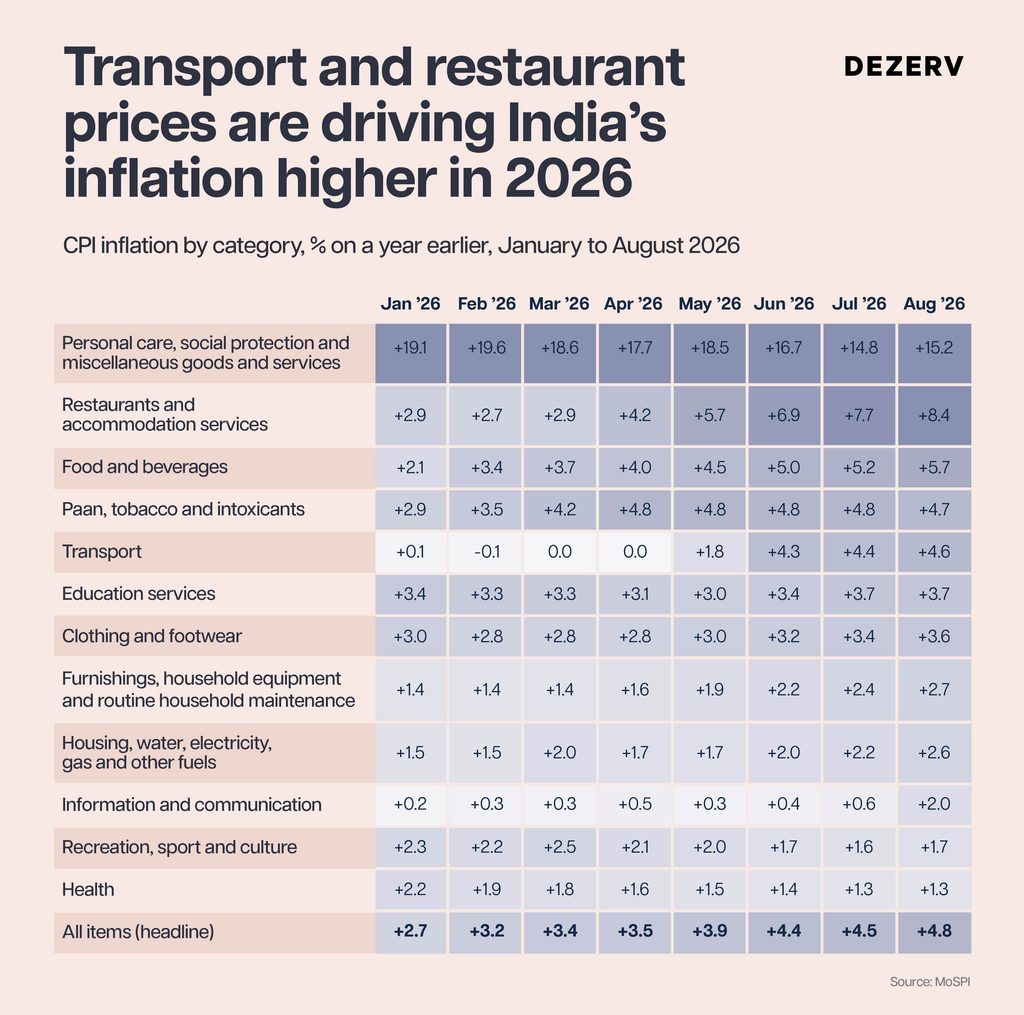
When the Strait of Hormuz closed, most people expected Indian prices to jump within weeks. India imports almost 90% of its crude, and about half of it comes through that one route. Yet as crude nearly doubled, retail inflation in March 2026 barely moved, and transport, the part of the budget most exposed to fuel, saw no price rise at all.
Part of the reason is where India started from. Through 2025, falling food and fuel prices pushed inflation to its lowest in more than 25 years, and the RBI spent the year cutting rates. Few large economies went into this war with that much room.
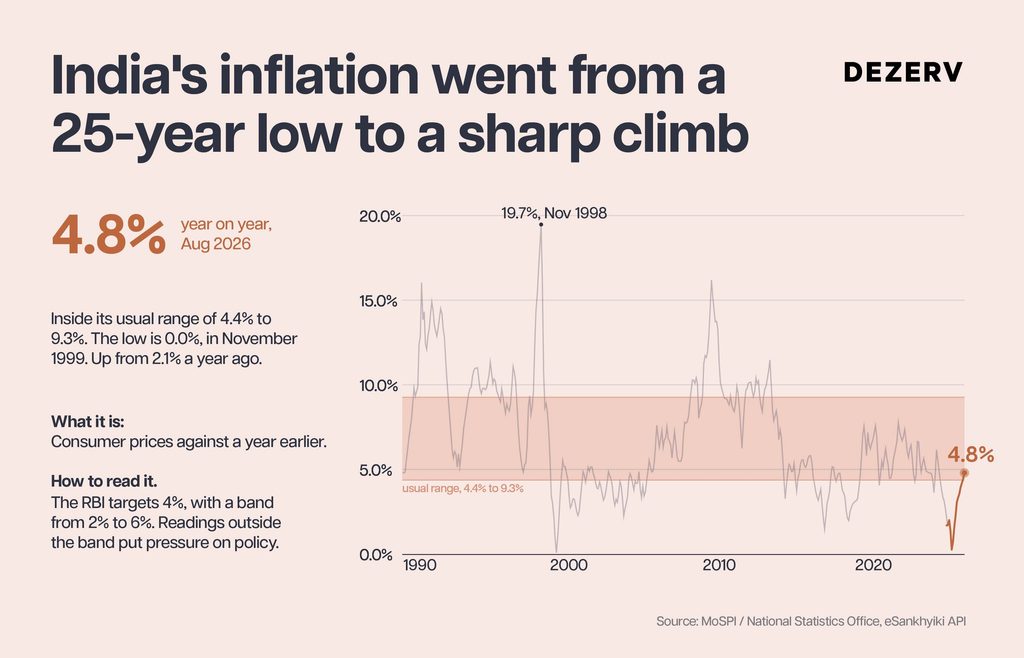
The rest came from decisions most people may have not noticed. The government cut excise duty on petrol and diesel, rationed natural gas to keep fertiliser plants supplied, and waived customs duty on petrochemical inputs, while state-run oil companies held pump prices and absorbed the losses. India was among a few countries, along with China, Korea and Hungary, where such steps, helped by low food prices, kept inflation in check through March and April 2026.
That protection came at a cost. It widens the government’s fiscal deficit and leaves less room for other spending. The rupee took some of the strain too, hitting a record low against the dollar and making every imported barrel costlier. What these measures really did was buy time. A cost shock like this moves slowly from factories to shop shelves, usually over more than a year, so in March most of it was still on its way.
You can already see the cushion wearing off. Transport, flat in March 2026 and April 2026, was up 4.6% by August, and restaurant prices are now more than 8% higher than a year ago. Personal care looks like the fastest riser at around 15%, but that mostly reflects gold and silver jewellery, not everyday spending.
And more is still in the pipeline. What businesses pay for fuel, metals and raw materials is rising about twice as fast as what we pay in shops.
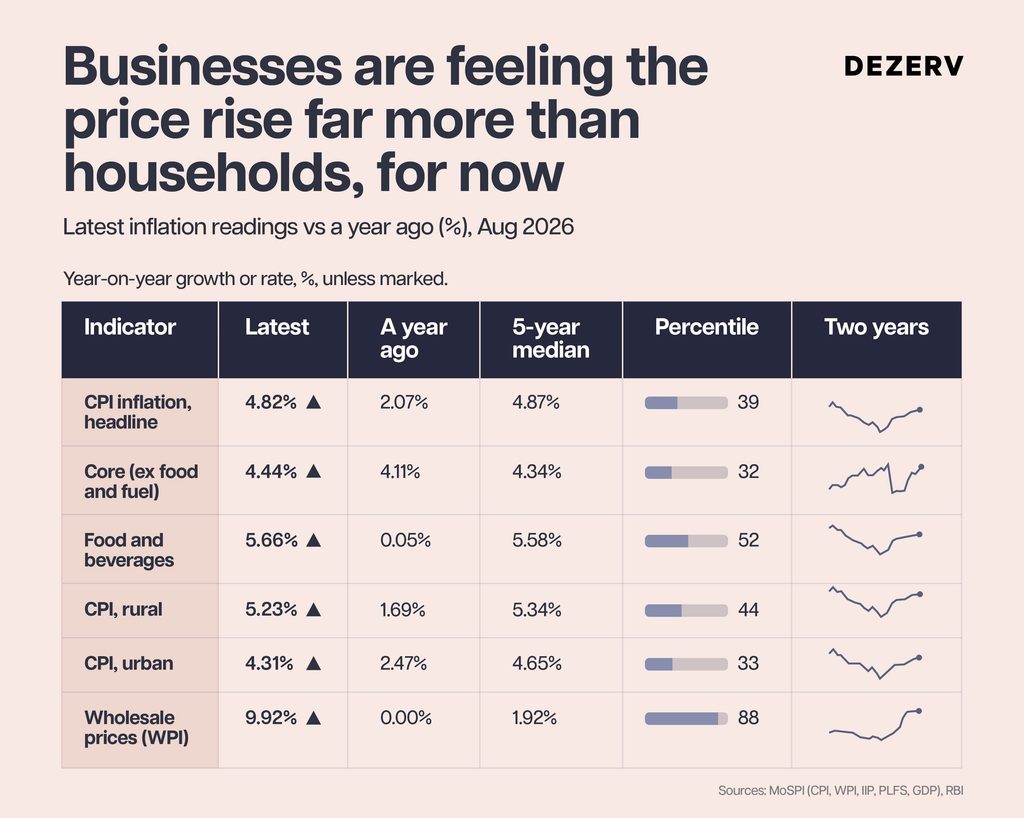
When businesses’ costs rise faster than the prices they charge, someone has to absorb the difference. For now, it is mostly companies, taking it out of their own profits. That rarely lasts, and sooner or later those costs reach the prices we pay. That is why I believe the peak of this inflation is still ahead of us.
How expensive oil moved from the petrol pump to everything else
Most of us think of an oil shock in terms of the petrol pump, because that’s the price we see change. But crude oil is also where a long list of everyday things begins, many of which have nothing to do with petrol: the plastic around our groceries, the polyester in our clothes, and the fertiliser on the farms that grow our food.
When crude rises, the increase grows at every step. Crude becomes naphtha, naphtha becomes the chemicals behind polyester and plastics, and each business passes its higher costs to the next. If the full cost were passed on, prices would rise across almost 9 out of 10 product categories in India.
Air travel is the most exposed, since fuel is an airline’s biggest cost, and fares could rise by close to a quarter. Clothing gets costlier through synthetic fibre, and furniture, appliances and packaging through plastics. Services that depend more on people than fuel, like education and phone/internet plans, are hit the least. Food is a different case altogether, and I’ll come to it in the next section.
Where you are in the world also matters. By mid-year, petrol prices across emerging Asia had risen about twice as much as in Latin America, because more than 80% of the oil and gas passing through Hormuz is headed for Asia.
Expensive oil also changes where the world’s money goes. In the US, petrol prices have nearly doubled since January 2026, pushing inflation back up, and the 10-year US government bond now pays about 5%, the most since 2007. When the safest investment in the world pays that much, global investors demand more from markets like India. Over two years, foreign investors have sold $56 billion of Indian shares, wiping out eight years of buying.
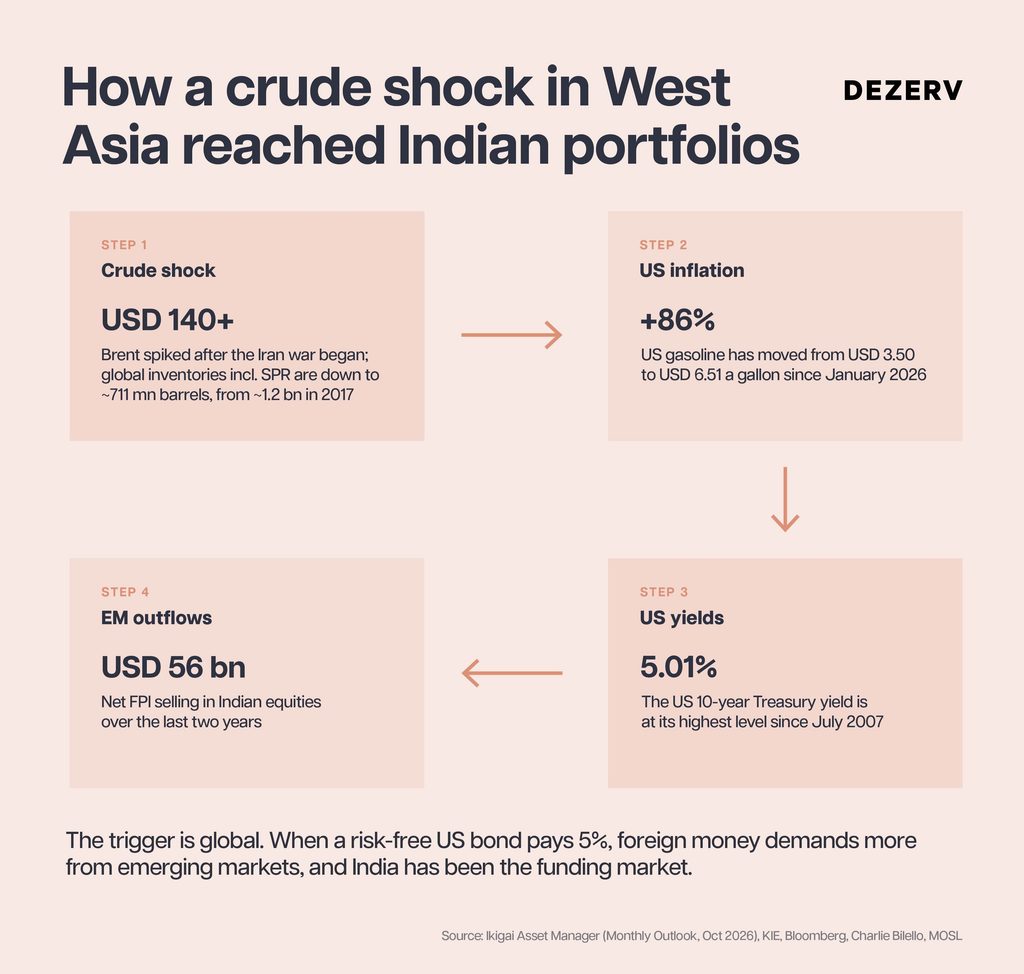
India is far from alone, and its share of the outflow from emerging Asia is small next to Korea and Taiwan. What has kept our markets steady is Indian investors, who put $177 billion into shares over the same period, more than three times what foreigners took out.
The world also has a thinner cushion now. Global oil stocks, including America’s emergency reserve, have fallen to about 711 million barrels, from around 1.2 billion in 2017, so any new disruption could push prices up quickly. So expensive oil is hurting us in two ways at once. It is pushing up the prices we pay for everyday things, and it is pulling foreign money out of Indian markets.
Why food prices are rising from two directions
For most of India’s history, food prices have depended on one thing above all: the monsoon. A good one keeps granaries full and prices steady; a weak one reaches every kitchen within months. This year, food is being squeezed by both the monsoon and oil, making the pressure harder to manage.
The first squeeze comes through fertiliser. Crude oil adds less than 0.2% to fertiliser costs directly. But once you add the gas, chemicals and transport needed to make it, fertiliser ends up nearly 18% costlier. Farmers responded by using less: sales of urea, DAP and potash fell sharply between April and July 2026, just as the kharif crop was being sown.
The second squeeze is El Niño, a warming of the Pacific Ocean that weakens the winds carrying monsoon rain to India. This year’s El Niño is unusually strong, and the monsoon ended 12.6% below normal, the weakest since 2015, with the east and northeast 26% short. Rice, sugarcane, soybean, maize and arhar dal have all been hit.
The two problems make each other worse. Less fertiliser and rain means lower crop yields. Low reservoirs also mean less hydropower, forcing more coal use to keep the lights on and pushing energy costs higher.
Households are already feeling it. Food and beverages inflation rose to 5.66% in August 2026, from almost nothing a year ago, and even a home-cooked thali costs noticeably more, driven by cooking gas and edible oil. The government has cut import duties on edible oils and sugar to ease prices.
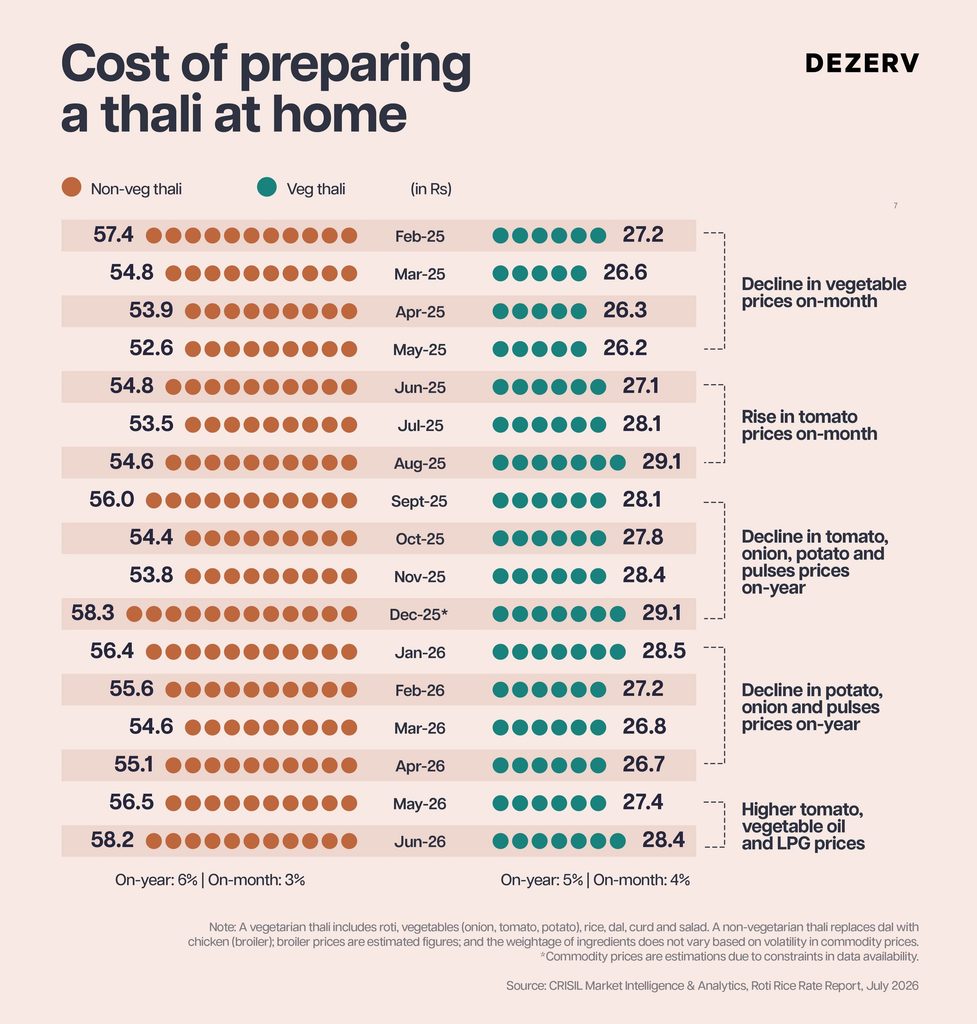
Companies are feeling it as well. Consumer staples are one of only two sectors expected to report lower profits for the July–September 2026 quarter. Globally, food prices hit their highest since November 2022 in August 2026, and fertiliser prices are expected to rise about 26% this year.
What concerns me most is how long this could last. El Niño is expected to continue into January 2027, putting the winter wheat and mustard crop at risk. After the failed monsoon of 2009, food inflation climbed to around 17% and stayed in double digits well into the following year.
Food makes up more than a third of the average Indian household’s spending. That is why I believe that even if oil eases, food could keep inflation high well into 2027.
What the RBI’s first rate hike since 2023 means for your money
Through 2025, anyone with a home loan got used to good news, as rate cuts brought EMIs down. On 7 October 2026, that ended. The RBI raised the repo rate from 5.25% to 5.5%, shifted its stance from “neutral” to “calibrated tightening”, and made clear that cuts are off the table while inflation heads towards 6% this quarter. India is not alone: around the world, inflation has stopped falling and central banks are raising rates again.
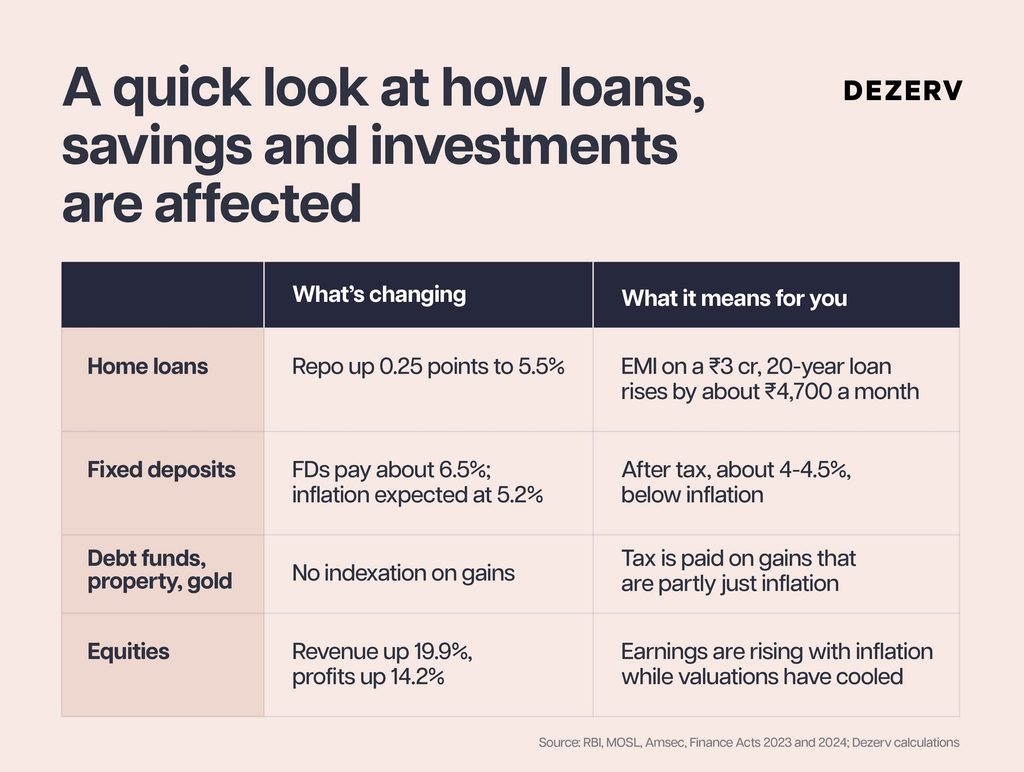
Borrowers see the impact first. On a ₹3 crore home loan, this one hike adds more than ₹55,000 a year, and if inflation stays high, it may not be the last.
Savers feel it later, which in my experience makes it more dangerous. A 6.5% FD feels safe, but in the highest tax bracket it earns around 4% after tax, less than prices are rising. Your deposit grows, but what it can buy shrinks.
Economists call this money illusion: we judge our wealth by the number we see, not what it can actually buy. India has also removed indexation, which let investors adjust gains for inflation before paying tax, first for debt funds and later for property and gold. So in a year like this, you may end up paying tax on gains that are really just inflation.
There is another side to inflation that gets far less attention. When prices rise, company revenues rise with them. Revenues of India’s top 500 listed companies grew nearly 20% last quarter, with profits up 14.2%. Analysts, who usually lower their profit forecasts as the year goes on, are raising them in 2026, something that has happened only twice since 2011.
Yet share prices have moved the other way. Two years ago, the Nifty traded at about 25 times expected earnings. Today, it is closer to 18 times, even as earnings improve. This is where recency bias comes in. After two flat years, it’s easy to judge the market by its recent past, and moving money to deposits feels natural, even though those are the assets that inflation and tax erode the fastest.
In 1979, India had very little to protect itself with. This time, the economy went in well prepared, and three quick checks can make sure your finances are too:
- Check when your home loan rate resets, and whether prepaying part of it from idle cash makes sense.
- Compare the post-tax return on any FDs maturing soon with where prices are heading.
- Rebalance if your portfolio mix has drifted from your goals.
Phases like this pass, and the investors who come through them best are usually the ones who make these checks early.
DISCLAIMER: The information provided herein is intended solely for educational and informational purposes. In the preparation of this document, Dezerv has used publicly available information and other sources believed to be reliable. While reasonable care has been taken to present reliable data in this document, Dezerv does not guarantee the accuracy or completeness of the data.