

Last week, I was flying to Hyderabad for our event The Decipher with Dezerv (a live investing and markets event that we host, where industry experts break down markets, investing trends, and wealth-creation ideas).
As the flight took off, I struck up a conversation with the person next to me, only to realise he was travelling for the same event. He was flying all the way from Chandigarh. I didn’t expect that.
Once I reached the venue, I met a few more clients who had flown in from other cities just to attend our event. And some of them had planned to stay on and explore Hyderabad.
Now that stuck with me.
When did events that you’re not obliged to attend (unlike weddings or other ceremonies) become something people travel for?
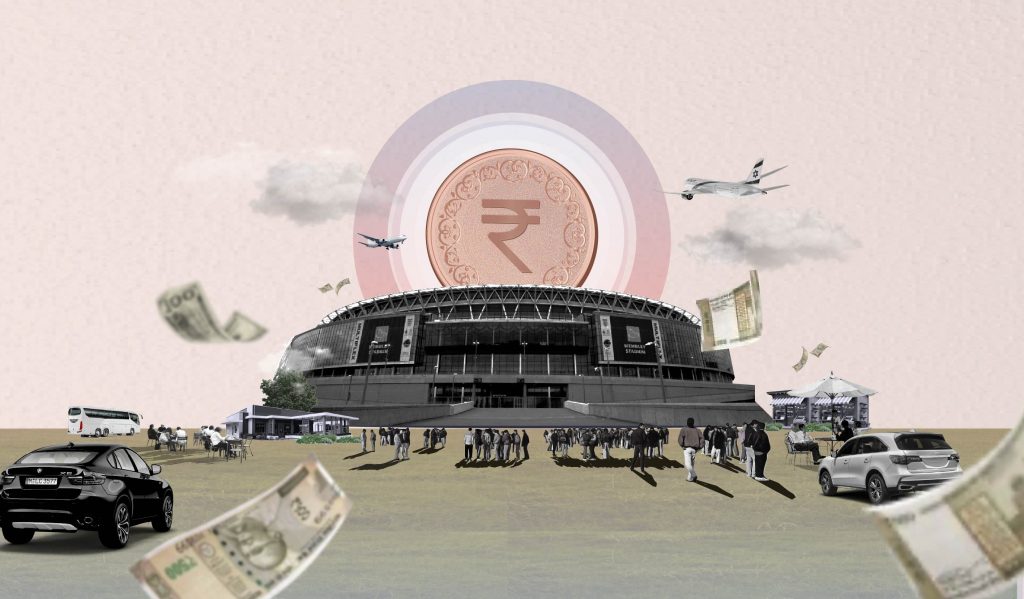
Turns out that people aren’t just attending these events anymore, they’re building travel plans around them, treating them like destinations. You could call them “event tourists.” They book flights, plan leaves, turn events into short trips, and often stay longer to explore the city.
This wasn’t the case a decade ago. So what changed?
Why do live events matter now?
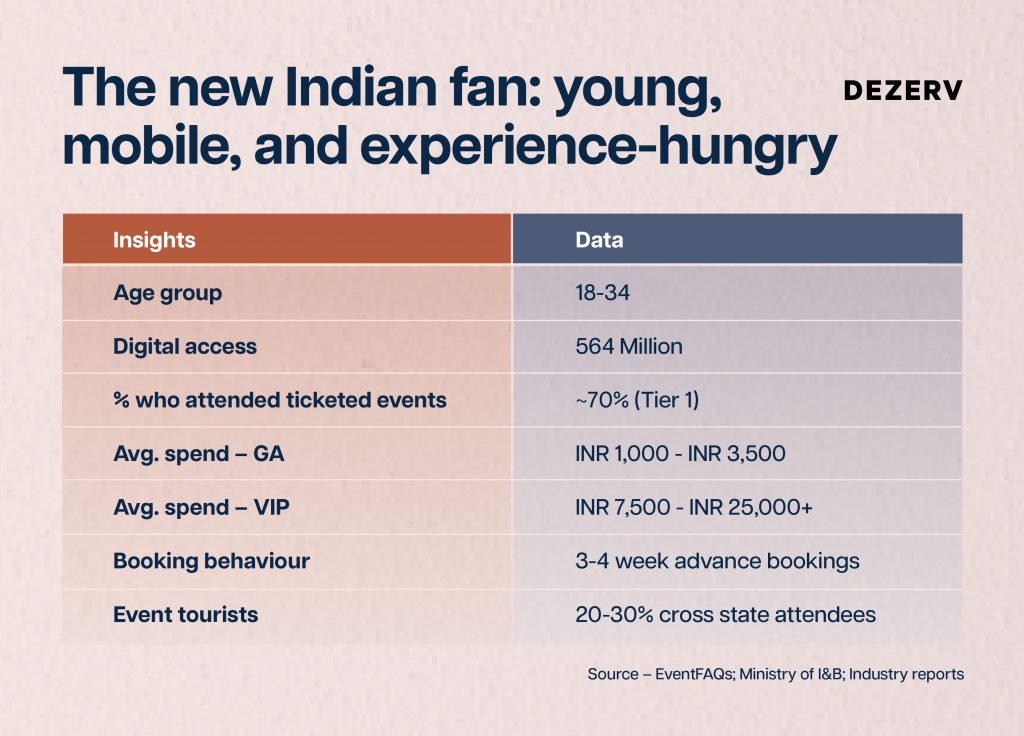
Today India is at a clear inflection point. It’s the world’s most populous country, home to more than 1.4 billion people, and nearly two-thirds of them are under 35. That’s a young, mobile, always-online audience that doesn’t just consume entertainment, but also actively shows up for it.
Across Tier 1 cities, live events have become a habit. More than 70% of Gen Z and millennials attended at least one ticketed show in the past year.
The reason?
- Rising disposable income
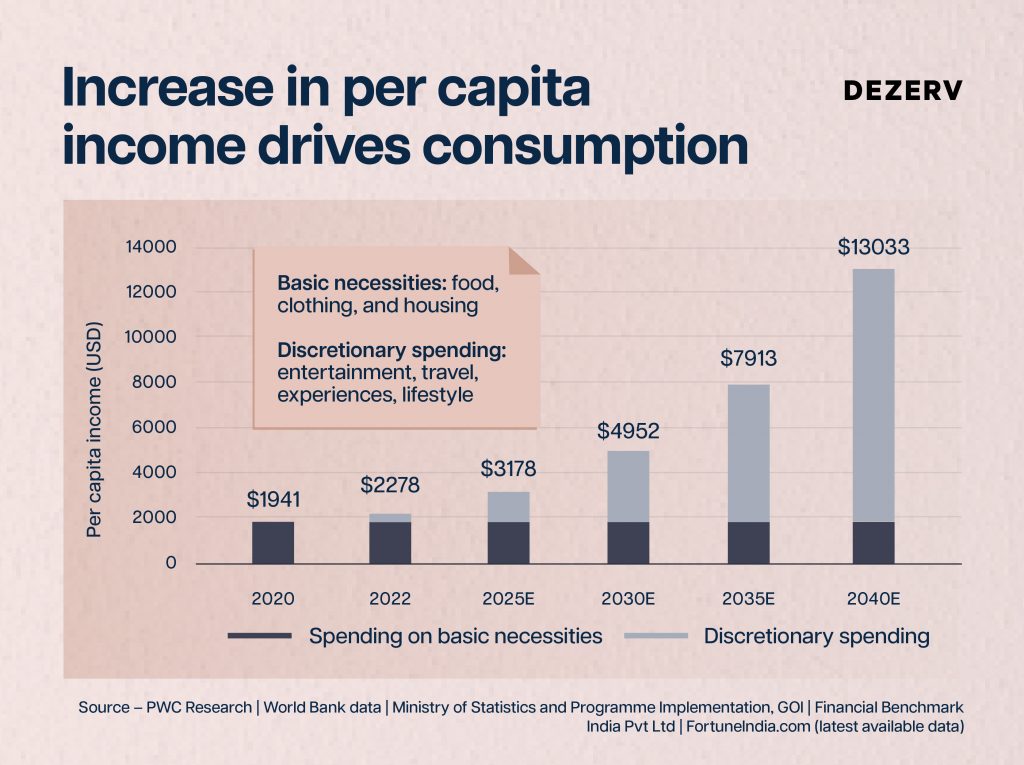
As a country’s per capita income rises, people first spend more on basic needs like food, clothing, and housing. But once incomes cross a certain level, basic needs are largely met. After that, most of the extra income goes toward discretionary spending, things like travel, entertainment, experiences, and lifestyle choices.
2. Social Signalling
The other day, I noticed my daughter sitting in front of her laptop, doing nothing but staring at the screen and watching the clock. I asked her what she was doing.
She said she was in a queue to buy concert tickets that would sell out the moment they went live. I was surprised. An hour early, just to wait for a concert ticket?
I asked her, “Why do you care so much about these concerts?”
Her answer was simple: “It reflects your interests. The shows you attend say a lot about who you are.”
That’s when it clicked. For younger audiences, live events function as social signals. The shows they attend, the artists they follow, even the festivals they post from quietly signal their taste and identity.
She also mentioned the obvious fear of missing out. When everyone’s posting stories, sharing inside jokes, and reliving moments online, not being there feels like being left out of the conversation altogether.
And more than anything, it’s about memories. For her generation, moments matter more than material buys. Live events create stories, emotions, and shared experiences that last far longer than the night itself.
How big is this market, really?
By the numbers, India’s live events market is already large and fast-growing, around ₹20,861 crore, expanding at 15% year-on-year, well above the global average. Ticketed music alone added over ₹13 billion, making one thing clear: experiences sell. And this isn’t just India’s story. Globally, live music is a serious business and is expected to hit $33.8 billion by 2027.
What makes India different is scale. When you have a young population this large, even a small rise in people attending events turns into a very big market.
But the real impact of live events goes far beyond ticket sales.
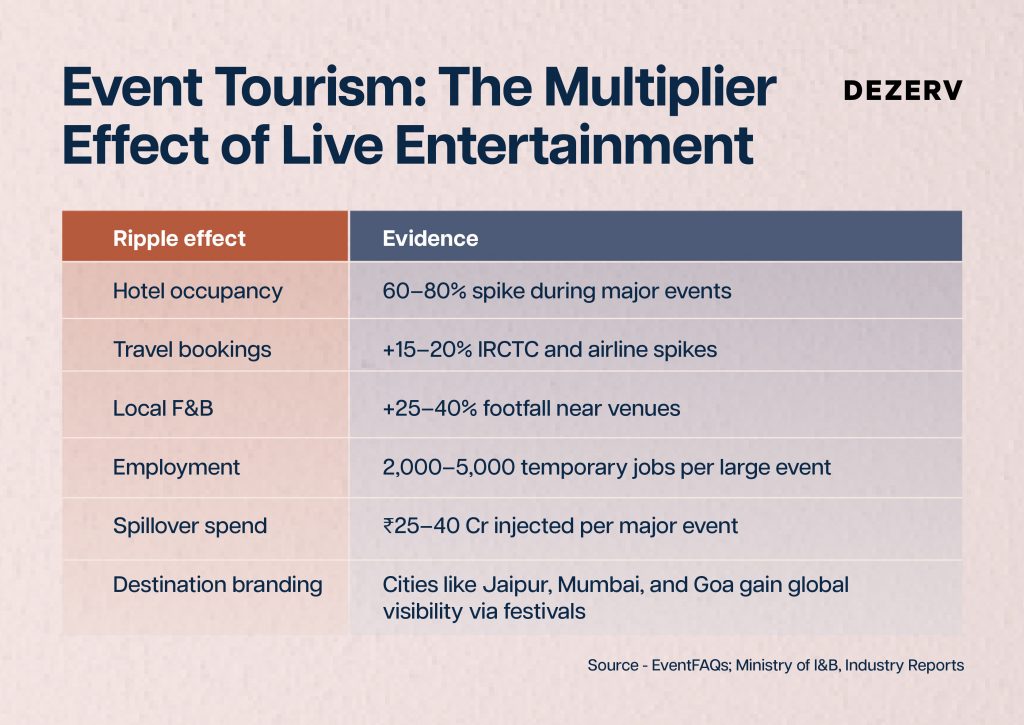
Large events set off a ripple effect across the local economy. Hotel occupancy spikes during major events. Flights and trains see booking surges. Restaurants, cafés, and local transport experience sharp jumps in footfall. Thousands of temporary jobs get created around a single event weekend, and tens of crores flow into the local economy through spillover spending.
But here’s a gap, while demand has surged, infrastructure hasn’t caught up.
Let’s be real: Can our cities handle the scale?
That’s where the excitement meets reality. Because while audiences are ready, venues often aren’t. Live events don’t run on enthusiasm alone, they run on infrastructure. Sound, sightlines, safety, access, crowd flow. Get these wrong, and scale collapses fast.
India has made progress, but unevenly. Put simply, we have places to gather but very few places built to perform. In fact, there are fewer than ten venues in the entire country that can comfortably host live music or performance events for 10,000 people or more.
For a country of this size, it’s a bottleneck. The contrast becomes sharper outside the metros.
Tier 2 and Tier 3 cities face an even tougher reality. Lacking permanent infrastructure, they depend on college grounds, and open fields.
How tech is changing live events
Infrastructure isn’t just the venue alone, it’s also the technology that runs the show. And we’ve come a long way. Buying a concert ticket today feels nothing like it did ten years ago. It’s cashless. There are digital check-ins. Prices change based on demand. Seats unlock in phases.
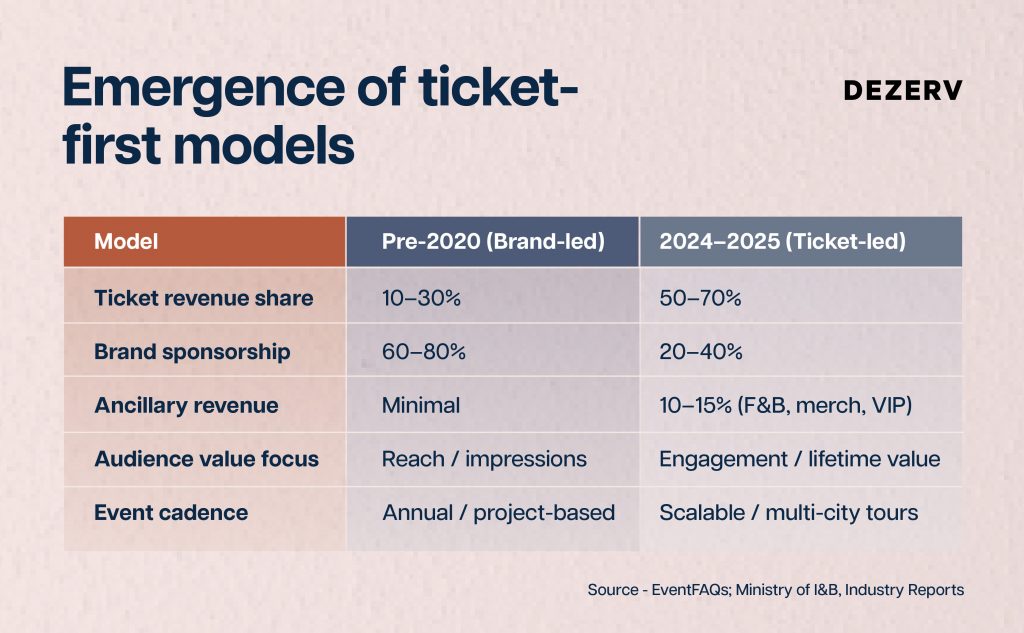
This tech backbone has quietly pushed the industry from brand-led events to ticket-first models. Before 2020, most events depended heavily on sponsorships, with tickets contributing just 10–30% of revenue. Today, tickets account for 50–70% of earnings, while brand dependence has fallen sharply. Fans now pay directly for access, experiences, and exclusivity. Brands still participate, but they’re no longer carrying the show.
Platforms like BookMyShow now run the entire show: ticketing, promotion, logistics, even on-ground operations. Skillbox focuses on indie communities. District by Zomato mixes events with food, nightlife, and plans for the evening. Buying tickets isn’t just about access anymore. It’s more like the first experience of the concert.
Coldplay Case Study : It was never just about music
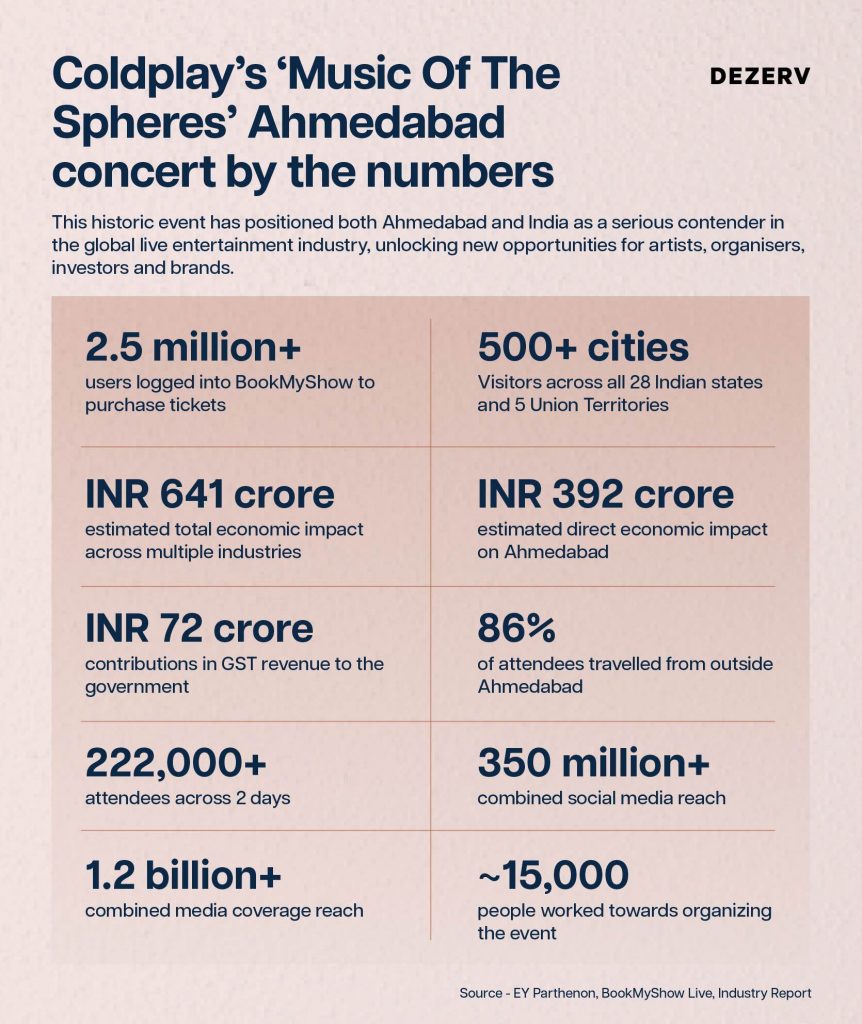
In January 2025, Coldplay’s Music of the Spheres tour arrived in India, and it arrived big.
Over two nights, more than 222,000 people packed into Narendra Modi Stadium. Fans flew in from across the country, hotels sold out, flights ran full, and the city stayed awake late into the night.
The weekend generated nearly ₹641 crore, with ₹392 crore staying right in Ahmedabad. Local businesses had one of their best weekends, and the government felt it too, collecting nearly ₹72 crore in GST.
It’s clear that live music isn’t just about culture anymore, it has become commercial.
Where did the money actually go?
Here’s the simplest way to think about it: For every ₹100 spent on a ticket, fans spent another ₹585 outside the stadium. So concert tickets weren’t the main expense. The trip was.
Stay (a little longer)
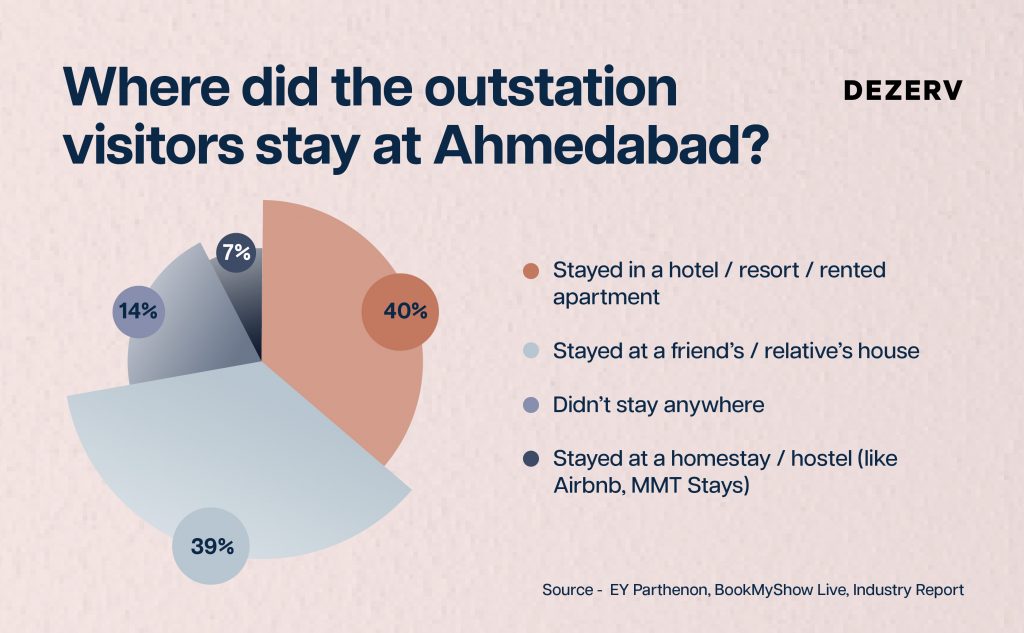
Almost half the outstation crowd booked accommodation in Ahmedabad, spending around ₹12,000 on average. Half of them stayed for more than one night, stretching their trip beyond concert day. About 23% spent over ₹15,000 on their stay as hotels sold out citywide within days of the concert announcement.
Getting there (and around)
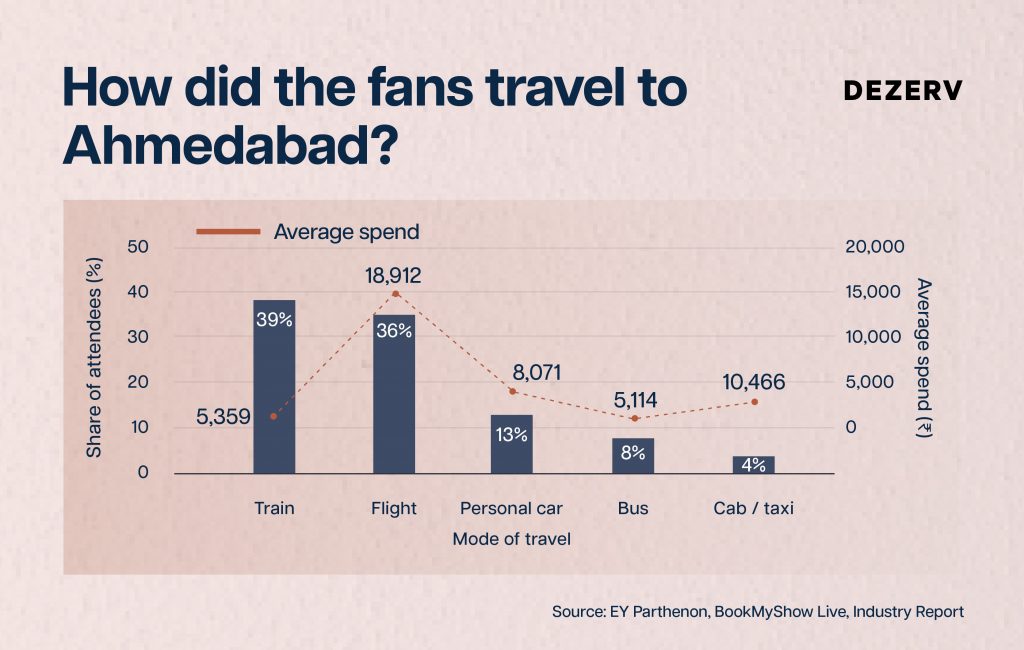
People spent an average of ₹10,792 on travel to and from Ahmedabad. About 75% arrived by train or flight. Flights were the most expensive option, yet nearly 1.4 lakh travellers passed through the airport over three days, with the concert day marking the highest single-day arrivals ever. Airfares jumped 3 to 4x, and people still booked.
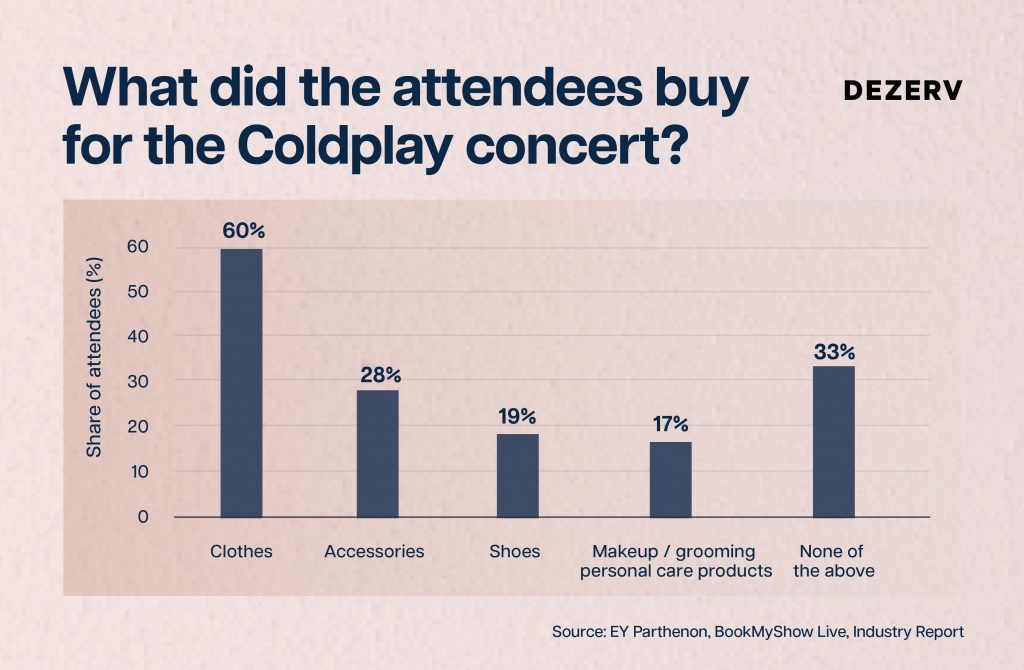
Clothes (getting concert-ready)
Concerts also mean dressing up. 68% of attendees bought something new just for the show, spending about ₹4,159 on average. Fashion apps saw the spike too. AJIO reported a 30% rise in Gen Z sales, especially sneakers and accessories.
Food (where people ate)
Concerts are all about enthusiasm and that requires energy. So the fans ate. Everywhere. 70% spent inside the venue on food and beverages. 89% spent outside, at restaurants and food vendors. Nearby eateries reported over 40% more customers than usual and over 30% higher sales.
Local businesses (the city benefits)
About 38% of attendees went local shopping, spending ₹2,253 on average. Notably, 71% of these shoppers were under 28, many discovering local crafts, markets, and small businesses for the first time.
Jobs (who made it happen)
Coldplay’s Ahmedabad concert didn’t just create noise, it also created work. Around 15,000 people were deployed across operations.
This wasn’t just India’s biggest in-stadium concert. With 222,000 attendees, it became the largest show Coldplay has ever played, surpassing their Sydney record.
Key takeaways: What this means for investors watching India’s next consumption wave?
Indian consumers are willing to plan, travel, and spend meaningfully around live experiences. Demand is habitual, socially driven, and tied to identity. That kind of behaviour tends to be sticky. Once habits form, industries don’t shrink easily.
So how do investors actually get early exposure? By backing the infrastructure around live events.
- Platforms
Ticketing, discovery, and event-tech platforms. They help people find shows, buy tickets, get in faster, and make the whole experience seamless. These scale faster than individual events and earn every time a show happens. - Behind-the-scenes assets
Venues, arenas, sound & lighting companies, crowd-tech (digital check-ins, RFID wristbands, etc), security and logistics providers. These benefits no matter who is performing. - Spillover businesses
Hotels, short-stay rentals, transport services, food joints, and nightlife spots all benefit when a city becomes a regular concert venue. It brings in a wave of visitors who spend across the city and not just at the concert. - Brand-led live formats
Festival brands, touring formats, and repeatable live experiences that can travel city to city, where people are happy to pay extra just to be part of it. - Content and media
Livestreaming, aftermovies, digital rights, and social content studios that let events earn before, during, and after show day.
Concerts or live events might last a night, but the businesses around them don’t. And that’s where the long-term story really is.
Disclaimer – The information provided herein is intended solely for educational purposes and should not be construed as solicitation, advertising, or providing any financial or investment advice. In this material, Dezerv has utilized information through publicly available sources, and other data deemed to be reliable. All trademarks, logos, and brand names mentioned are used for identification purposes only and do not imply endorsement or recommendation.